

How to Use Music as Support When Music Is Also the Source of Pressure
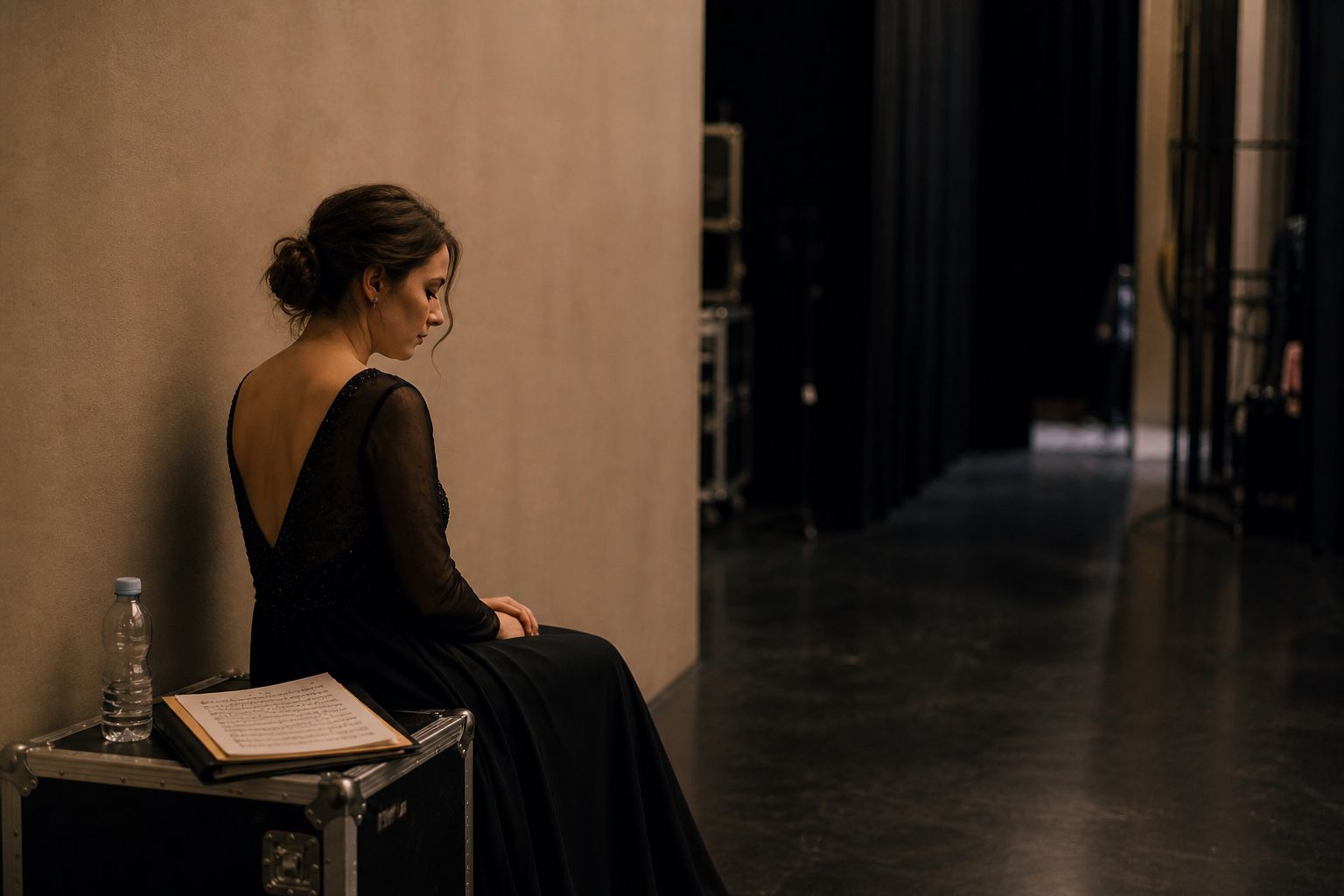
A few minutes before playing, the same music can feel like two completely different things.
In the practice room, it may have been familiar. You knew where the phrase was going. You had worked on the details. You had found colors, direction, character, maybe even moments of real pleasure.
Then the pressure arrives.
Suddenly, the same phrase feels narrower. The same entrance feels heavier. The same sound that yesterday gave you confidence now seems to ask whether you are still capable of doing what you know how to do.
I have lived that shift many times.
And for a long time, I thought it meant something was wrong with me. I thought that if I truly loved music, I should be able to access that love whenever I needed it. I thought that if I was well prepared, music would automatically support me under pressure.
But it does not always work that way.
Sometimes music becomes the place where many fears gather at once: the fear of being judged, the fear of not sounding like yourself, the fear of losing control at the exact moment when you most want to feel free. Perhaps the deepest fear is that all your work will not come through when it matters.
And still, the strange thing is this: the way back is often inside the music too.
Not in a romantic or naïve way. Not by pretending that pressure does not exist. But by learning how to return to the phrase, the sound, the body, and the present moment when your mind wants to run toward judgment.
That is not easy.
But it can be trained.
When Music Starts to Feel Like a Test
Most of us did not begin music with this kind of pressure.
At the beginning, there was probably curiosity. Sound. Movement. Something that attracted you before you could explain it. Maybe a teacher inspired you. Maybe an orchestra recording opened something inside you. Maybe the instrument simply felt like a voice you wanted to follow.
Then, little by little, music became more serious.
Lessons, exams, competitions, auditions, feedback, rankings, corrections, expectations, and comparisons all became part of the path. In many ways, this is normal. If you want to grow, you need discipline. You need feedback. You need standards. You need to learn how to listen with precision, and sometimes that means noticing things you would prefer not to notice.
But somewhere along the way, many musicians begin to confuse improvement with self-judgment.
A phrase is no longer simply a phrase. It becomes evidence.
A sound is no longer simply sound. It becomes a verdict.
A mistake is no longer a piece of information. It becomes a threat.
And once music becomes a threat, the body responds accordingly. The breath changes. The muscles tighten. The mind starts scanning for danger. Instead of listening to the line, you begin listening to yourself from the outside, almost as if you were sitting in the panel judging your own playing before anyone else can.
I have done this many times, and I know how exhausting it is.
The Moment Music Stops Being Music
One of the most difficult parts of performance anxiety is that it does not only affect how you play. It affects how you relate to music.
You may still practise. You may still be disciplined. You may still care deeply. From the outside, everything can look normal.
But inside, the relationship has changed.
Instead of asking what the phrase needs, you start asking whether it will be enough. Instead of listening for color, direction, silence, character, or shape, you begin listening for danger.
That shift matters.
Because when music becomes only a result, you lose contact with the very thing that could help you. The phrase that could give you direction becomes something you fear. The rhythm that could ground you becomes something you monitor. The sound that could bring you back into the present becomes something you use to measure your value.
This is why telling a musician with anxiety to “just be musical” can sometimes hurt.
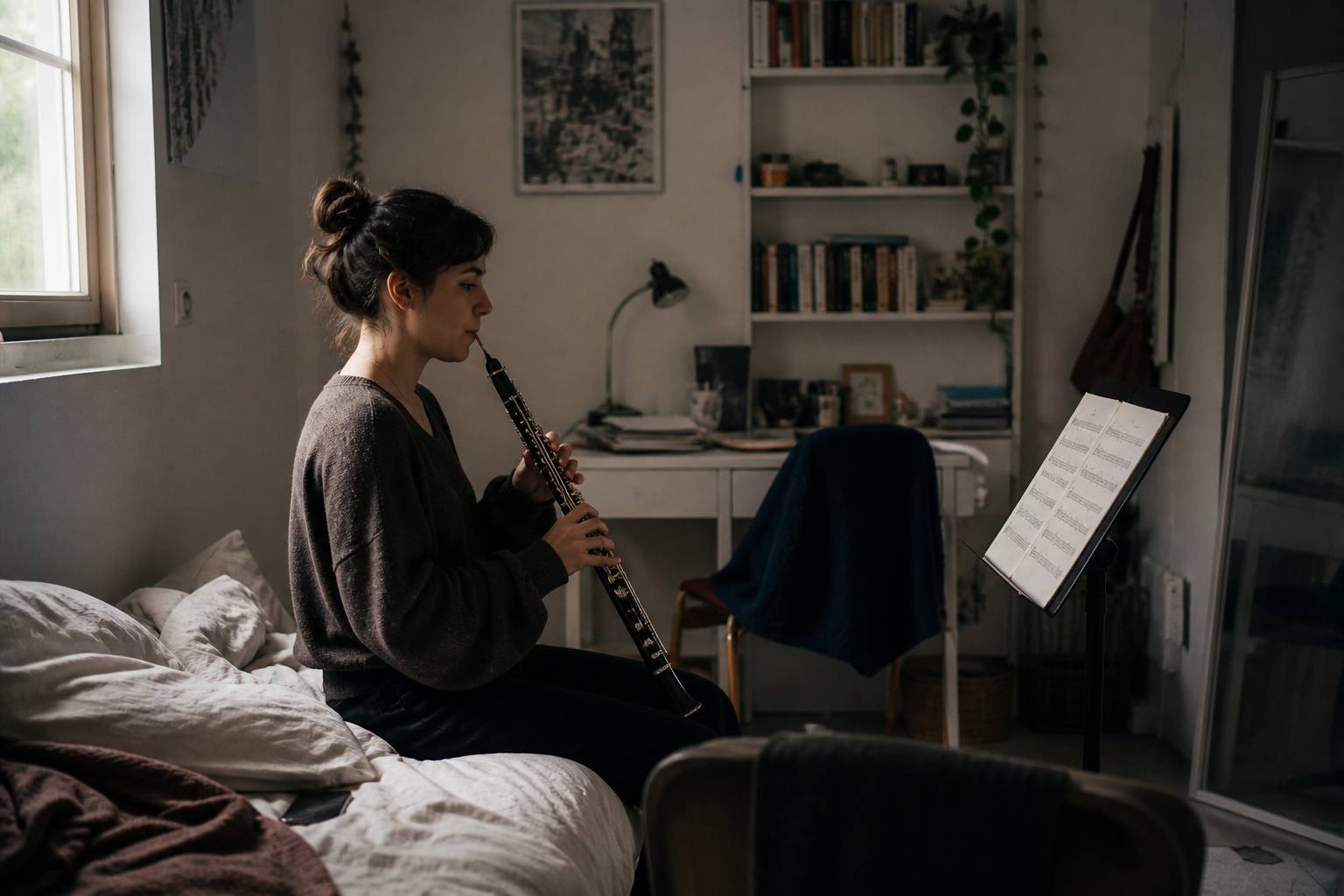
Because deep down, that musician may already be grieving the fact that music no longer feels safe.
I Had to Learn to Come Back Differently
For a long time, I thought the solution was to become stronger.
More prepared, more confident, more controlled, more immune to pressure. That was the direction I knew.
And of course, there is nothing wrong with wanting to be prepared. Preparation matters. Technique matters. Professional standards matter. I still believe that deeply.
But I also learned that if my only answer to fear was control, I would never really be free.
Because control has limits.
A panel will always have its own perception. A colleague may understand you, or may not. The room may help you, or it may feel dry and uncomfortable. The pianist may breathe differently than you expected. You may hear another candidate before going in. Your body may bring back the memory of a past mistake at the worst possible moment.
These things affect us because we are human.
But they cannot be the place where we build our whole sense of safety.
At some point, I had to learn another way.
Not to abandon preparation, but to relate to music differently inside pressure. I had to stop using music only as a place where I proved myself. I had to allow it to become a place where I could return.
Music Can Become an Anchor Again
This may sound simple, but it is not.
When music has been connected to judgment for years, it takes time to trust it again. You cannot force yourself back into joy. You cannot command your nervous system to feel safe. You cannot pretend that auditions are not auditions or that judgment does not exist.
It does exist. People listen. Panels decide. Colleagues notice. Results happen.
The point is not to deny that.
The point is to make judgment smaller than music.
Music can help you come back because it gives your attention somewhere meaningful to go. Not into abstract confidence, not into trying to feel brave, and not into fighting anxiety. It gives you something concrete: the beginning of the phrase, the direction of the harmony, the weight of the first note, the character of the rhythm, the color you want to offer, the silence before you start.
These things are not decorative. They are anchors. They bring you out of the imagined future and back into the musical present.
And the musical present is almost always more generous than the anxious mind.
A Different Question Before You Play
Before an important performance, many musicians ask themselves questions that increase pressure without realizing it.
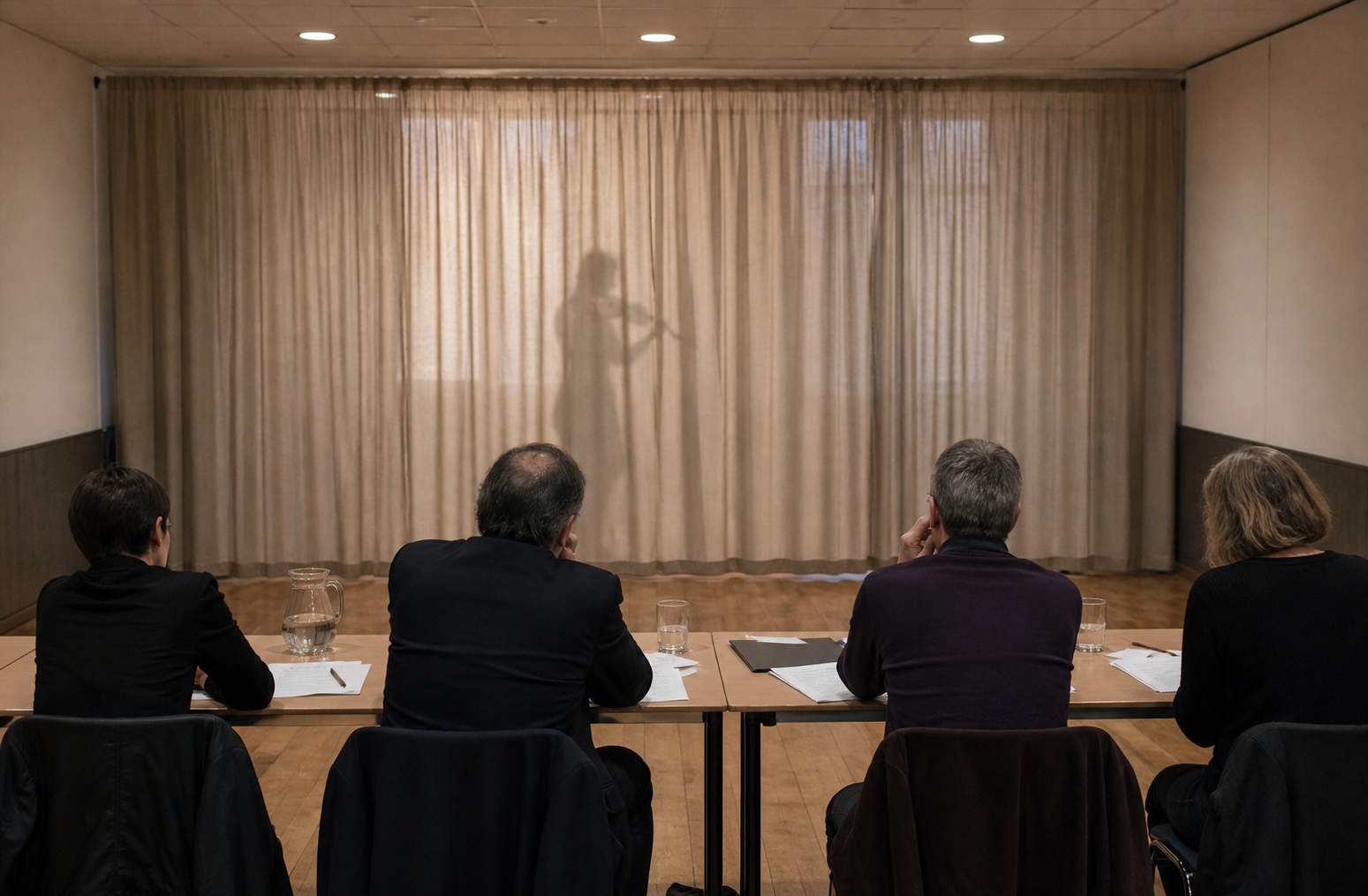
They wonder whether they are ready. They imagine what could happen if they fail. They try to guess what others will think. They compare today’s state with yesterday’s best version. They fear that nerves will take away the very thing they have worked so hard to build.
These questions are understandable. I have asked them too. But they rarely help.
A more useful question is:
“What does the music need from me now?”
This question changes the direction of your attention.
It does not make the pressure disappear. It does not guarantee a result. But it gives you a role again. You are no longer only the person being evaluated. You are the musician serving a phrase, shaping time, creating atmosphere, communicating something.
That is a very different inner position.
You are not waiting to be accepted.
You are participating.
Start Small: One Phrase, One Return
If music currently feels more like pressure than support, do not try to fix the whole relationship at once.
Start with one phrase.
Choose something you know well. Before playing, take a quiet moment and ask what the phrase is asking for. Maybe it needs warmth. Maybe clarity. Maybe direction. Maybe stillness. Maybe courage. Maybe simplicity.
Then play it with that single intention.
Not to impress, prove, or check whether you are good, but to stay in contact.
Afterward, resist the immediate need to judge. Instead, ask yourself:
“Was I with the music?”
This is not a soft question. It is a serious one.
Because if you can begin to stay with the music in the practice room, you can slowly learn to stay with it under pressure too.
Not perfectly. But more often.
And that is already a profound change.
You Can Be Afraid and Still Make Music
One of the biggest misunderstandings about performance anxiety is the idea that you must feel calm in order to play well.
Of course calm is pleasant. I like calm. We all do.
But many meaningful performances do not begin from calm. They begin from intensity, trembling, uncertainty, a heart that is beating faster than you would like, and a mind that needs to be guided back again and again.
The goal is not to eliminate every wave of fear.
The goal is to keep choosing music while fear is present.
That choice may be small. Almost invisible from the outside. It may be the decision to listen to the piano instead of your inner critic, to feel your feet instead of chasing the last mistake, to shape the next note instead of apologizing for the previous one.
Sometimes the bravest thing is simply to let the phrase continue.
This is how trust is rebuilt.
Not through one heroic moment, but through many small returns.
The Music Was There Before the Fear
Sometimes I remind myself that music was there before many of the fears I later attached to it.
Before auditions, professional pressure, comparisons, and the need to be chosen, there was sound. There was curiosity. There was something honest that made me want to continue.
That part is still there.
It may be covered by years of expectations, disappointments, harsh comments, self-criticism, or fatigue. But it has not disappeared.
And perhaps the work is not to go back to some innocent version of ourselves. We cannot erase what we have lived, and maybe we do not need to. The work is to return to music with everything we know now.
With more honesty, more humility, more tenderness, and more courage.
Music may be the place where pressure appears. But it can also be the place where you learn to meet yourself differently.
Not as a machine that must deliver.
Not as a problem that must be fixed.
As a human being, standing inside sound, trying again to communicate something true.
And maybe that is already music.
FAQ
Why does music sometimes feel like pressure instead of joy?
Because music can become connected to evaluation, auditions, comparison, and identity. When your sense of worth feels tied to how you play, music can start to feel threatening instead of supportive.
Can music help with performance anxiety?
Yes, but not by forcing yourself to “just enjoy it.” Music can help when you use it as an anchor: phrase, rhythm, sound, breath, character, and listening can bring your attention back to the present.
What should I focus on when I feel judged while playing?
Focus on one concrete musical action. For example, the direction of the phrase, the quality of the first note, the pulse, the color, or the character. This gives your mind somewhere useful to return.
Is it possible to rebuild trust in music after years of anxiety?
Yes. It usually happens gradually, through repeated moments where you experience music as contact rather than judgment. Small, consistent changes in practice and performance can rebuild that trust.

Instagram
Facebook
LinkedIn
Website