


Performance Anxiety in Musicians: Why It Feels So Hard to Talk About
If you’re a musician who struggles under pressure, there’s a good chance you’ve felt alone in it.
Not because nobody else feels it. Quite the opposite. Many musicians do.
But in this world, pressure is often hidden behind discipline. Anxiety gets disguised as “caring.” Overthinking gets mistaken for dedication. And the fear you carry before an audition, concert, or important performance can become so normal that you stop questioning it.
You just learn to live with it.
You practice more. You tighten your standards. You tell yourself to be stronger. You try to fix the problem privately, quietly, without letting anyone see how much it affects you.
And still, something feels heavy.
For many musicians, performance anxiety is not just about nerves on stage. It’s about what those nerves seem to mean. It can feel like your body is betraying you. Like your mind becomes unreliable at the exact moment you need it most. Like all the work you’ve done might not be enough if you can’t access it under pressure.
That experience is painful on its own.
What makes it even harder is how difficult it can be to talk about.
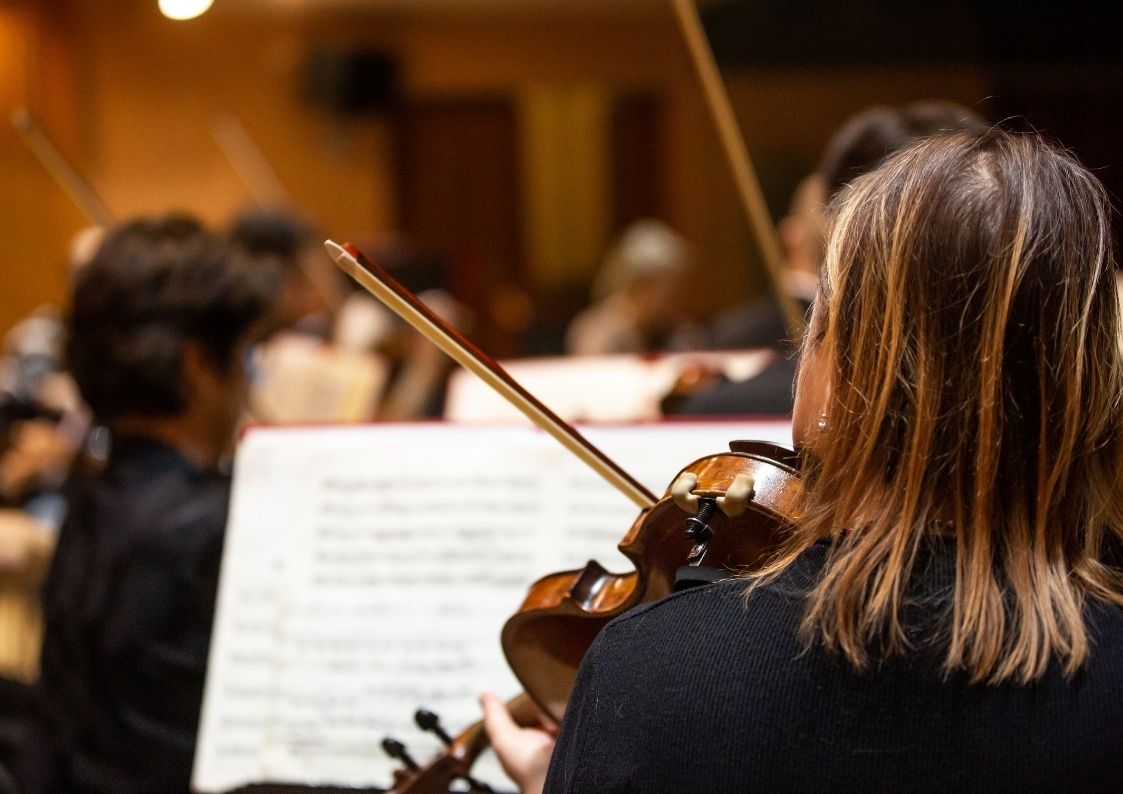
Why musicians often stay silent
One reason is simple: music is deeply personal.
When you perform, you’re not only showing skill. You’re revealing preparation, taste, sensitivity, control, discipline, and identity. So when anxiety shows up, it rarely feels like a small technical issue. It feels exposed. It feels personal. Sometimes it even feels shameful.
A lot of musicians quietly ask themselves questions like:
“Why can’t I just trust myself?”
“Why do I fall apart when it matters?”
“If I were really prepared, wouldn’t I feel calmer?”
“What does it say about me that this affects me so much?”
These questions can create a private kind of suffering. From the outside, you may still look committed, capable, even successful. Inside, though, you might be fighting tension, fear, self-doubt, and a constant sense that you need to hold everything together.
That inner split is exhausting.
And because classical music culture often rewards control, composure, and high standards, many musicians become very good at hiding what is actually happening. They learn to present competence while carrying enormous pressure underneath.
The result is that many people feel isolated by something that is, in reality, incredibly common.
Performance anxiety is not a sign of weakness
This matters more than it may seem.
If you interpret anxiety as weakness, you will usually respond to it by becoming harder on yourself. You’ll try to out-discipline it. You’ll push more, judge more, and expect more from yourself. You may practice longer hours, tighten your routines, and chase a feeling of certainty that never quite arrives.
At first, that can look productive.
But often it creates a deeper problem: your preparation becomes driven by fear instead of trust.
You’re no longer only practicing to grow. You’re practicing to prevent disaster. You’re not simply preparing to express music well. You’re trying to protect yourself from what might happen if things go wrong.
That shift changes everything.
It affects how you practice, how you listen to yourself, how you recover from mistakes, and how safe you feel on stage.
Performance anxiety does not mean you care too much, and it does not mean you care the wrong way. It simply means that somewhere along the line, performing became linked to threat. To judgment. To danger. To self-worth. To consequences your nervous system takes very seriously.
That’s not weakness. That’s a human response.
Why “just be confident” doesn’t help
Many musicians have heard some version of this advice: be confident, trust yourself, don’t overthink, stay positive.
The problem is that these phrases often arrive too late and go too shallow.
When anxiety is strong, it is not usually because you forgot a motivational sentence. It is because your system does not feel safe. Your mind may know you are prepared, but your body still reacts as if something important is at risk.
That’s why confidence cannot be built only through positive thinking.
Real confidence grows when you start relating to pressure differently. When you understand your patterns. When your preparation becomes more structured and less chaotic. When you stop using self-criticism as your main method of control. When you learn how to meet difficult moments without spiraling.
Confidence is not the absence of fear.
Very often, it is the result of learning that fear does not have to run the whole performance.

What begins to help
The first step is not becoming fearless.
The first step is honesty.
Not dramatic honesty. Not public oversharing. Just a more truthful relationship with your own experience.
That might sound like:
“I’ve been carrying more pressure than I admit.”
“I don’t feel as steady as I look.”
“I keep trying to solve this by working harder, but that’s not the whole answer.”
“I need a better way to prepare for pressure, not just for the notes.”
That kind of honesty can be surprisingly powerful. It interrupts the cycle of silence. It helps you stop treating your struggle as a personal flaw. And it opens the door to a different kind of growth—one rooted in awareness, not shame.
From there, practical change becomes possible.
You can start building preparation that includes your mind and nervous system, not just your technique. You can notice where your pressure spikes. You can learn what triggers self-doubt. You can create more realistic performance simulations. You can develop ways to recover after mistakes instead of collapsing internally. You can practice staying connected to the music even when some discomfort is still present.
None of this is instant. But it is real.
And it tends to help far more than pretending the pressure is not there.
You are not the only one
This may be the most important thing to say in a first post like this: if performing feels heavier than it “should,” you are not broken, and you are not alone.
A lot of thoughtful, disciplined, highly capable musicians struggle with pressure in ways other people never see.
Some struggle before auditions. Some unravel in the final week before an important performance. Some do well in the practice room and feel disconnected on stage. Some look calm outwardly while fighting panic internally. Some recover quickly after mistakes. Some carry one mistake for days.
Different patterns, same human reality.
Pressure changes how you hear yourself. It changes how you think. It changes what your body does. And when you do not understand that, it is easy to make the struggle mean something cruel about who you are.
But pressure is not proof that you are failing.
Sometimes it is simply the place where deeper work needs to begin.
That is part of what this blog is here for.
Not to offer perfection. Not to tell you to “just relax.” Not to add more pressure in the name of self-improvement. But to give language, clarity, and practical support to the inner side of performing—the part musicians often carry in silence.
Because you deserve more than survival.
You deserve a way of preparing and performing that feels steadier, kinder, and more honest. A way of growing that does not depend on fear. A way of standing on stage that allows more of you to stay present.
That shift is possible.
And it often starts by admitting what has been hard to say.
FAQ
Is performance anxiety in musicians normal?
Yes. It is very common, even among highly trained and experienced musicians. It can show up as racing thoughts, tension, shaking, overthinking, memory slips, or a feeling of losing access to what you can normally do in practice.
Why is it so hard to talk about performance anxiety?
Because many musicians connect their performance with identity, worth, and competence. Admitting that pressure affects you can feel vulnerable, especially in environments where control and composure are highly valued.
Does performance anxiety mean I’m not prepared enough?
Not necessarily. Preparation matters, but anxiety is not always a sign of poor preparation. Sometimes the real issue is how your mind and body respond to pressure, judgment, or high stakes.
Can performance anxiety improve without trying to eliminate it completely?
Yes. The goal is not always to feel zero anxiety. For many musicians, progress comes from learning how to work with pressure more skillfully so it no longer controls the performance.
What helps with stage fright and audition anxiety?
A combination of structured preparation, mock performance practice, emotional awareness, nervous system regulation, and a healthier response to mistakes often helps more than simply trying to “think positive.”

Instagram
Facebook
LinkedIn
Website