


How to Stop Caring So Much What Other Musicians Think
Most musicians know what it is like to feel watched.
Not only by the audience. Sometimes the audience is the easy part. They do not know your old habits, your teacher’s comments, your weaknesses, the passage you have been fighting with for weeks, or the comparison that has been living in your mind since conservatory.
The harder gaze often comes from other musicians.
The colleague sitting beside you. The teacher listening from the back of the room. The panel behind the screen. The friend who seems calm before every audition. The person who once made a casual comment that stayed with you for years.
For a musician, fear of judgment can become a quiet background pressure. It does not always appear as obvious panic. Sometimes it looks like over-practising. Sometimes it looks like playing cautiously. Sometimes it looks like needing reassurance before you can trust what you already know.
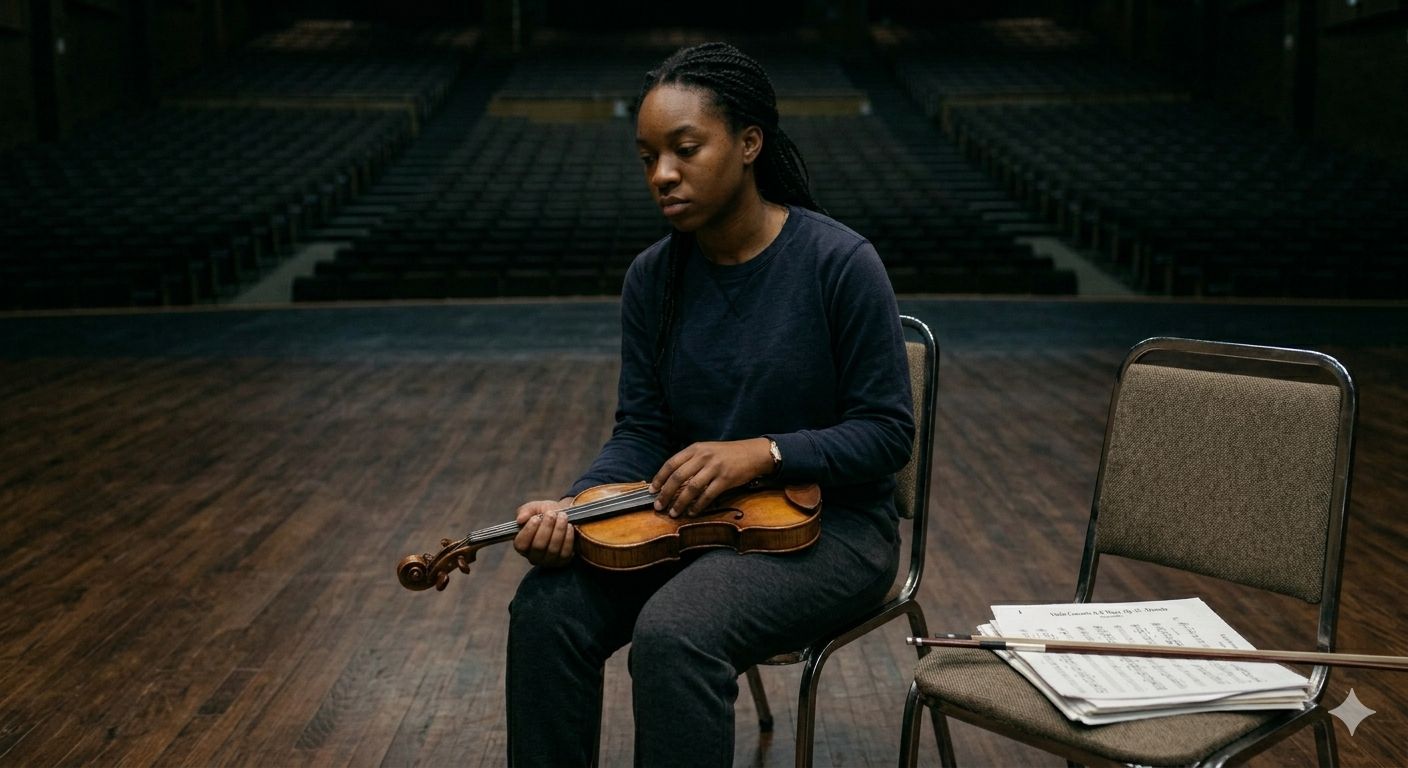
And often, the most painful part is this: you may know intellectually that other people are not thinking about you as much as you fear they are. Still, when you pick up the instrument, your body behaves as if every note is being measured.
Where fear of judgment shows up
Fear of judgment rarely waits for the audition day.
It can begin in the practice room, long before anyone else is listening. You imagine the panel hearing the excerpt. You imagine a colleague noticing the shift that is not clean enough. You imagine someone concluding that you are not ready — and practice becomes less about understanding the music and more about managing the impression of competence.
In performance, something more particular happens. You play a note and immediately begin evaluating it from the outside, as if you are both musician and listener at once. This split attention is one of the most exhausting features of performance anxiety — and one of the hardest to name. What the mind does with a performance afterward often follows directly from this split: the evaluation that started during playing continues long after it ends.
In lessons, it may appear as a need to prove that you have worked hard. In rehearsals, as a tightening the moment something slips. The mistake itself may be brief, but your relationship with it stretches far beyond the moment.
Why other musicians’ opinions can feel so heavy
Musicians care what other musicians think because the musical world is small, precise, and deeply personal.
Your playing is not a neutral task. It carries your taste, your history, your training, your body, your nervous system, your hopes. When someone judges your playing, it can feel as if they are judging more than sound.
This is closely connected to a pattern many musicians carry: depending on external response to feel settled after playing. When approval becomes the primary way the nervous system regulates itself, other musicians’ opinions stop being professional information and start feeling existential.
There is also the reality of the profession. Musicians do evaluate one another. Panels decide. Teachers assess. Colleagues notice. Standards matter. The goal is not to pretend judgment does not exist. The more useful shift is learning to stop giving every imagined judgment authority over your body, your choices, and your sense of self.
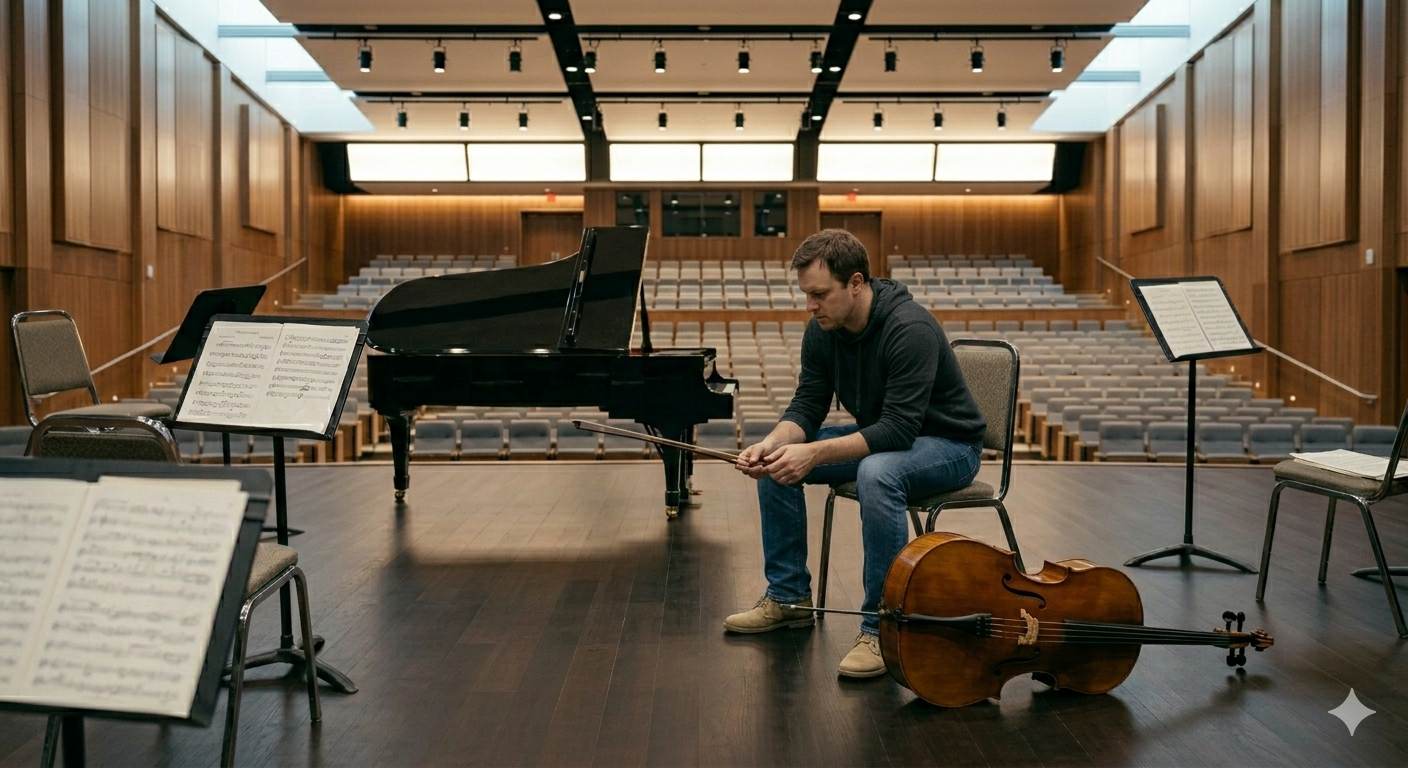
How fear of judgment shapes your playing
When you are worried about what others think, your attention narrows.
You may start choosing safety over expression. You try not to be wrong instead of trying to communicate something true. You hold back your sound, smooth out your phrasing, avoid risk, or over-control details that need more breath.
This is one of the places where perfectionism and fear of judgment become almost impossible to separate. Both produce the same effect: the standards that were meant to serve the music start serving self-protection instead. The music becomes smaller because the inner world has become crowded.
A self-conscious musician tries to prevent embarrassment. A grounded musician stays in relationship with the music, even when discomfort is present. You do not need to feel fearless to play well. You need enough attention available for the task in front of you — enough trust to keep listening, enough steadiness to let a note be a note rather than a public statement about your worth.
The practice room is where this begins
If you want to care less about what other musicians think, begin by noticing how often you bring them into the practice room with you.
Many musicians practise with an invisible panel in the room. Every repetition is judged before it is understood. Every unstable passage becomes evidence. Every tired day becomes a story about discipline or talent.
This makes practice emotionally expensive — and it is one of the less-discussed dimensions of why performance anxiety feels so hard to talk about: it does not only happen on stage. It begins much earlier, in the private relationship between the musician and the work.
A more useful practice room is more neutral. It does not mean lowering your standards. It means changing the meaning of what you notice. A cracked note is information. A tight shift is information. A phrase that collapses under pressure is information. None of these need to become identity.
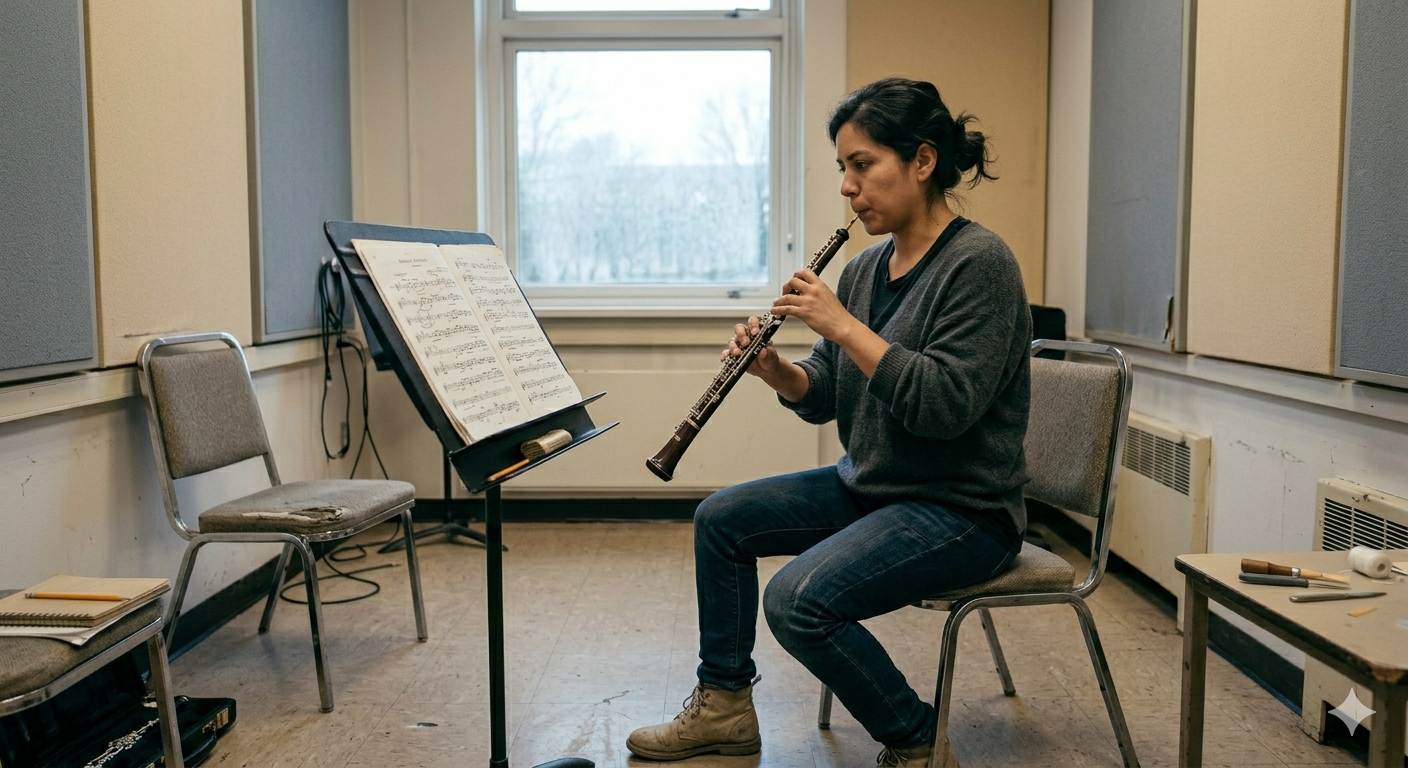
When you can observe your playing without immediately turning it into a verdict, you begin to build the inner conditions that make performance more stable. You also become easier to coach, because feedback no longer has to pass through so much shame before it can become useful.
You may care for a long time
There is a quiet honesty musicians need to hear: you may care too much what other people think for a long time.
This does not mean you are immature. It does not mean you are weak. It means you are human, and you have spent years inside a field where your work is heard, compared, corrected, and ranked.
The change is usually gradual. At first, you may still feel the fear, but you recover more quickly. Then you begin to notice that someone else’s opinion, even when it matters professionally, does not have to define your entire inner state. Later, you may find that your desire to communicate becomes stronger than your desire to be approved of.
That is when playing starts to feel different. Not because nobody can judge you anymore, but because judgment is no longer the centre of the experience.
A practical shift before you play
Before a lesson, rehearsal, audition, or performance, try asking a different question.
Instead of “What will they think of me?” ask: “What do I want to stay connected to?”
It might be the pulse. It might be the character of the opening. It might be the physical feeling of releasing the breath before you begin. It might be the sound you want to invite from the instrument.
You can also name the fear plainly: I am worried about being judged. There is often relief in telling the truth without drama. The fear becomes a condition you are experiencing, not a command you must obey.
Then choose one musical intention. Not a full list of everything you must prove. Just one thread you can return to when your mind starts scanning the room for approval or danger.
What changes over time
The goal is not to become indifferent.
You will probably always care, at least somewhat, what respected musicians think. You are part of a community. You have taste. You have ambition. You want your work to matter. All of that is reasonable.
But over time, caring can become less desperate. You can respect feedback without collapsing under it. You can notice another musician’s opinion without handing them the whole steering wheel. You can prepare seriously without turning every practice session into a trial.
And slowly, the playing has more room.
More room for sound. More room for risk. More room for the person behind the instrument to actually be present.
Most musicians who reach that place do not get there by stopping caring. They get there by gradually learning that what they think of their own playing — honestly, clearly, without shame — begins to matter more than what they imagine everyone else is thinking.
That is usually where the real playing begins.
FAQ Section
Why do I care so much what other musicians think?
Because music is personal, public, and often evaluated by people whose opinions can affect your path. The goal is not to shame yourself for caring, but to build enough inner steadiness that their opinion does not control your playing.
Can fear of judgment affect auditions?
Yes. Fear of judgment can make you more self-conscious, physically tense, and cautious. It can pull attention away from the music and toward imagined evaluation, which often makes performing feel less free and less connected.
How do I stop feeling judged in rehearsals?
Start by separating what happened from what it means. A mistake in rehearsal means something needs attention. It does not automatically mean you are unprepared, exposed, or inadequate.
Is it possible to stop caring completely?
Most musicians do not stop caring completely. What changes is the weight of other people’s opinions. You can learn to care without losing yourself — and without letting imagined judgment shrink what is available to you musically.

Instagram
Facebook
LinkedIn
Website