

When Your Relationship With Your Instrument Changes
There are moments in a musical life when your instrument begins to feel different in your hands.
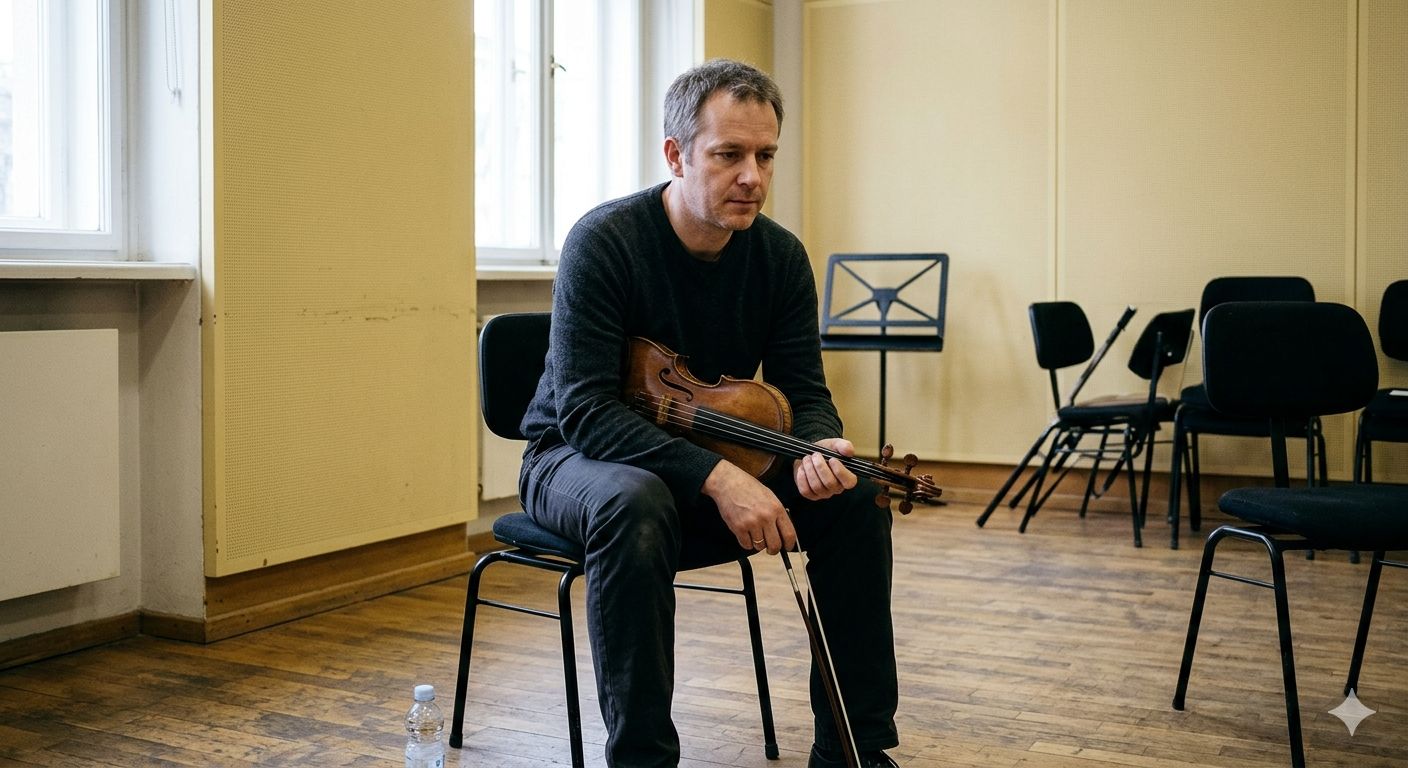
Nothing dramatic has happened. You still care about music. You still know how much the instrument has given you. You are still practising, rehearsing, preparing — doing all the things that make up the visible part of this life. But privately, something has shifted. The relationship that once felt simple now feels like it is carrying more than you expected.
The practice room may no longer feel as open as it once did. The sound may still matter deeply, but it now arrives with expectation, comparison, or the memory of times when you did not feel good enough. Something that was once a source of pleasure has quietly become a place you brace yourself before entering.
When this happens, most musicians feel they should not admit it. The instrument is supposed to be the constant. The thing that does not change even when everything else does.
But a changing relationship with your instrument is not always a sign that the love has disappeared. Sometimes it is simply the sign of a longer relationship becoming more honest.
It is not a failure when the feeling changes
At the beginning, the instrument can feel almost magical. There is so much you do not know yet, and that not knowing can be full of possibility. Progress is visible. Curiosity is close to the surface. Even difficulty has a certain freshness because the whole relationship is still opening.
Later, things become more layered.
Your ear changes. Your standards become sharper. You know what can go wrong. You have lived through auditions, lessons, rehearsals, criticism, injuries, and moments when the instrument seemed to expose something you were trying to protect. The same object is still there. The same body is still involved. But the emotional history around the instrument is no longer simple.
That does not mean you have betrayed music. It does not mean you are less serious, less talented, or less grateful. It means the relationship has accumulated experience. And any meaningful relationship changes when more life passes through it.
The instrument can start to carry too much
For many classical musicians, the instrument slowly becomes more than an instrument.
It becomes the place where you measure yourself. The place where you try to prove that the years of work have meant something. The place where you hope to feel capable, and where you fear discovering that you are not.
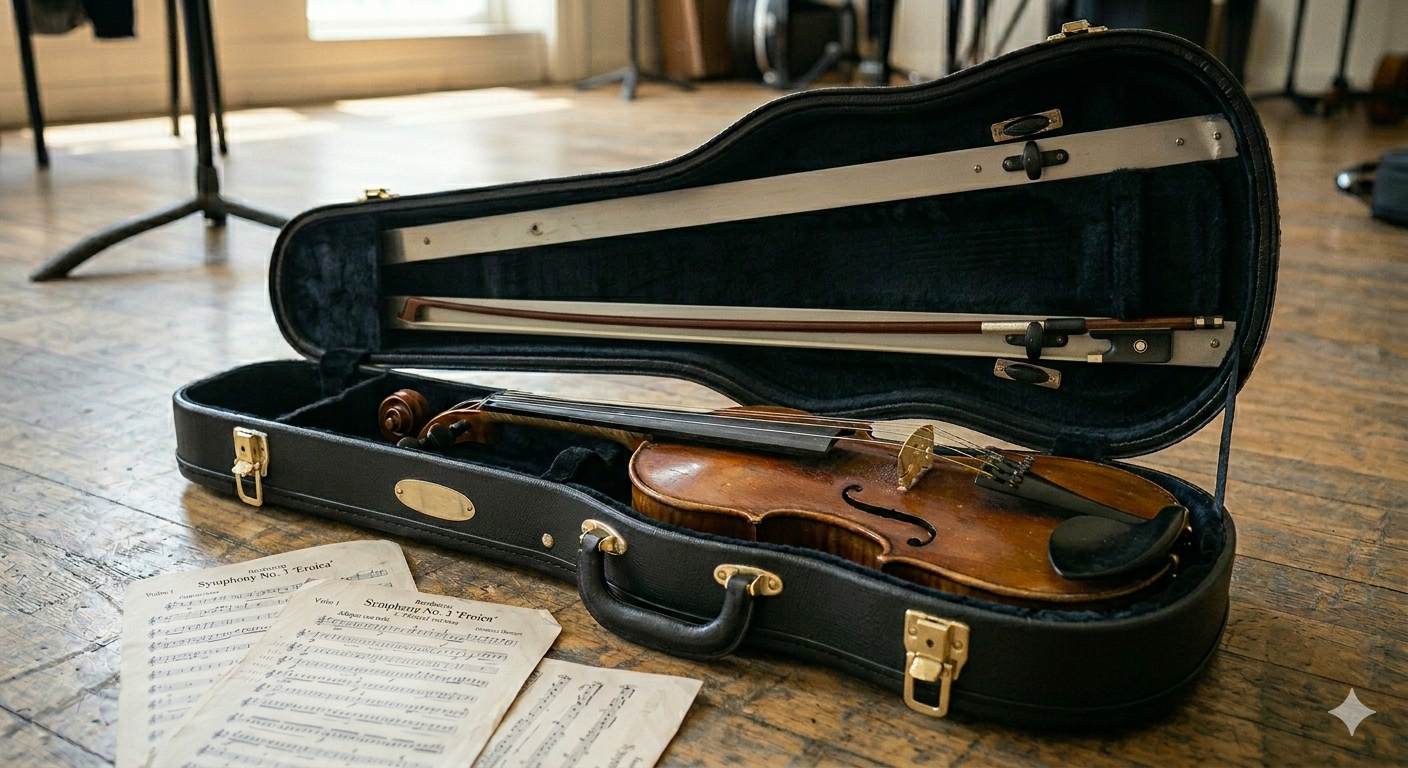
It becomes connected not only to sound, but to approval, belonging, identity, and the quiet question of whether you are enough. This is closely related to what perfectionism does to a musician’s inner life — the standards that began as a form of care gradually become a form of pressure.
When that happens, picking up the instrument can feel heavier than it should.
You may still love the music, but the act of playing has become crowded. Crowded with expectation. Crowded with past experiences. Crowded with the imagined listening of other people. Crowded with the voice inside you that turns every imperfection into a conclusion.
This is one reason musicians can feel distant from the instrument without wanting to quit. The distance is not always a lack of love. Sometimes it is a form of protection. Something in you is tired of meeting the instrument as a test every day. And if that is true, forcing more discipline into the same emotional pattern is unlikely to change what needs to change.
There are different seasons in this relationship
Sometimes the instrument feels like home. You return to it and there is contact. The work may still be demanding, but you can sense yourself inside the sound. You remember why this matters.
Sometimes it feels like a duty. You practise because you have to. You prepare because something is coming. The relationship becomes functional, but not alive in the same way.
And sometimes, after years of giving so much, the instrument feels strangely neutral. Not hated. Not loved in the same immediate way. Just there.
This last state is often a signal worth taking seriously. The same pattern appears in how musicians relate to rest — the sense that stopping or stepping back feels like a form of failure. Learning to recognise when the system is depleted rather than weak changes how you respond to these seasons, in practice and beyond it.
These seasons are not necessarily permanent. They are part of the emotional weather of a long musical life. But they deserve to be named, not pushed through.
What makes reconnection difficult
Reconnection becomes difficult when you try to go back to an earlier version of yourself.
You may want to feel like the younger musician who practised for hours with hunger, or the student who felt chosen by the instrument, or the version of you who had not yet attached so much consequence to every result.
But you cannot unknow what you know now. You cannot erase the pressure, the history, the disappointments, or the standards you have developed.
Part of what makes this hard is that the instrument has often become the primary place where the nervous system goes to find out whether things are okay — a pattern that also shows up in the need for external validation after playing. When the instrument carries that weight, returning to it requires more than good intentions.
Reconnection does not always mean recovering the old feeling. Sometimes it means building a new relationship that can hold more truth. A relationship where the instrument is not only a place of achievement, but also a place of listening. Not only a place where you correct yourself, but a place where you can be in contact with sound without immediately turning it into judgment.
This kind of reconnection is quieter. It asks for patience. It asks you to stop demanding that the instrument make you feel exactly as it once did.
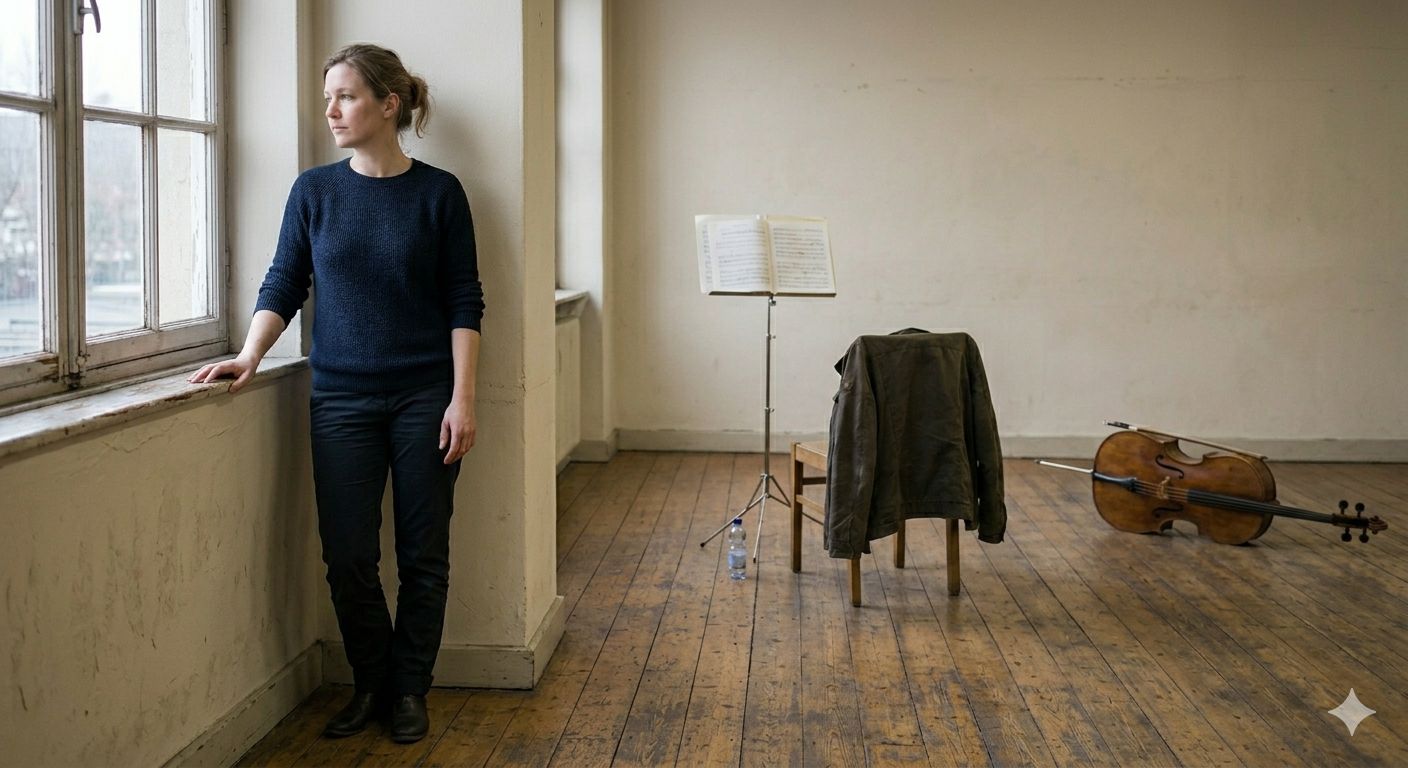
How to begin rebuilding trust
Trust returns through small experiences, not through pressure.
You may begin by noticing what happens in your body before you play. Do you tighten before the first note? Do you already expect disappointment? Are you listening with curiosity, or as if you are waiting to be accused?
These questions are not meant to make the practice session heavier. They are meant to help you see what kind of relationship you are entering when you open the case, sit down, lift the instrument, or take the first breath.
From there, choose something small and concrete. Play for a few minutes without trying to fix everything. Let one note be only one note. Work on a passage slowly enough that your body has time to understand it. End a session by naming what became clearer, not only what still needs work. Practise recovery, not just control.
None of this replaces serious preparation. It changes the atmosphere around it. You can still be precise. You can still be ambitious. You can still care deeply about quality. But the instrument does not have to be the place where you attack yourself into becoming worthy.
It can become again a place where you meet the work with more steadiness.
Let the relationship mature
Your relationship with your instrument is allowed to change.
It is allowed to become less innocent and more truthful. It is allowed to go through distance, fatigue, maturity, tenderness, resistance, and return. It is allowed to ask different things from you at different points in your life.
A mature musical life is not built by preserving one feeling forever. It is built by learning how to stay in relationship with the instrument as you change — as your body changes, as your ambitions change, as your understanding of pressure changes, and as your need for honesty becomes stronger than your need to perform certainty.
If the relationship feels different now, listen to that.
Not with panic. Not with guilt.
With care.
The change may not be a sign that something has ended. It may be an invitation to meet your instrument in a way that is more spacious, more patient, and more true.
FAQ Section
Is it normal for my relationship with my instrument to change?
Yes. A musician’s relationship with their instrument naturally changes over time. As your standards, experiences, pressures, and identity evolve, the instrument may begin to feel different emotionally, not only technically. This is not a sign of failure — it is the sign of a relationship with real history.
Why does my instrument feel like pressure now?
For many musicians, the instrument becomes connected to evaluation, auditions, comparison, criticism, and self-worth. When that happens, playing can begin to feel like a test rather than a relationship. The pressure is not in the instrument — it is in what the instrument has come to represent.
Does feeling distant from my instrument mean I should quit?
Not necessarily. Distance can come from fatigue, pressure, burnout, disappointment, or a need for a different kind of practice. It is worth listening carefully to what the distance is telling you before treating one season as a final answer.
How can I reconnect with my instrument?
Begin with small moments that lower pressure. Play without immediately judging, work slowly enough to feel your body settle, and create practice experiences where the instrument is not only connected to correction or performance. Trust returns through repeated small experiences of contact, not through effort alone.

Instagram
Facebook
LinkedIn
Website