


Are You Practicing to Improve—or Just to Feel Safe?
There is a particular kind of practice session that looks like dedication but functions more like worry.
You have already addressed the passage. It worked. And then, instead of moving on, you return to it. Then again. Not because you identified something new to change, but because you are not quite sure the last result was real.
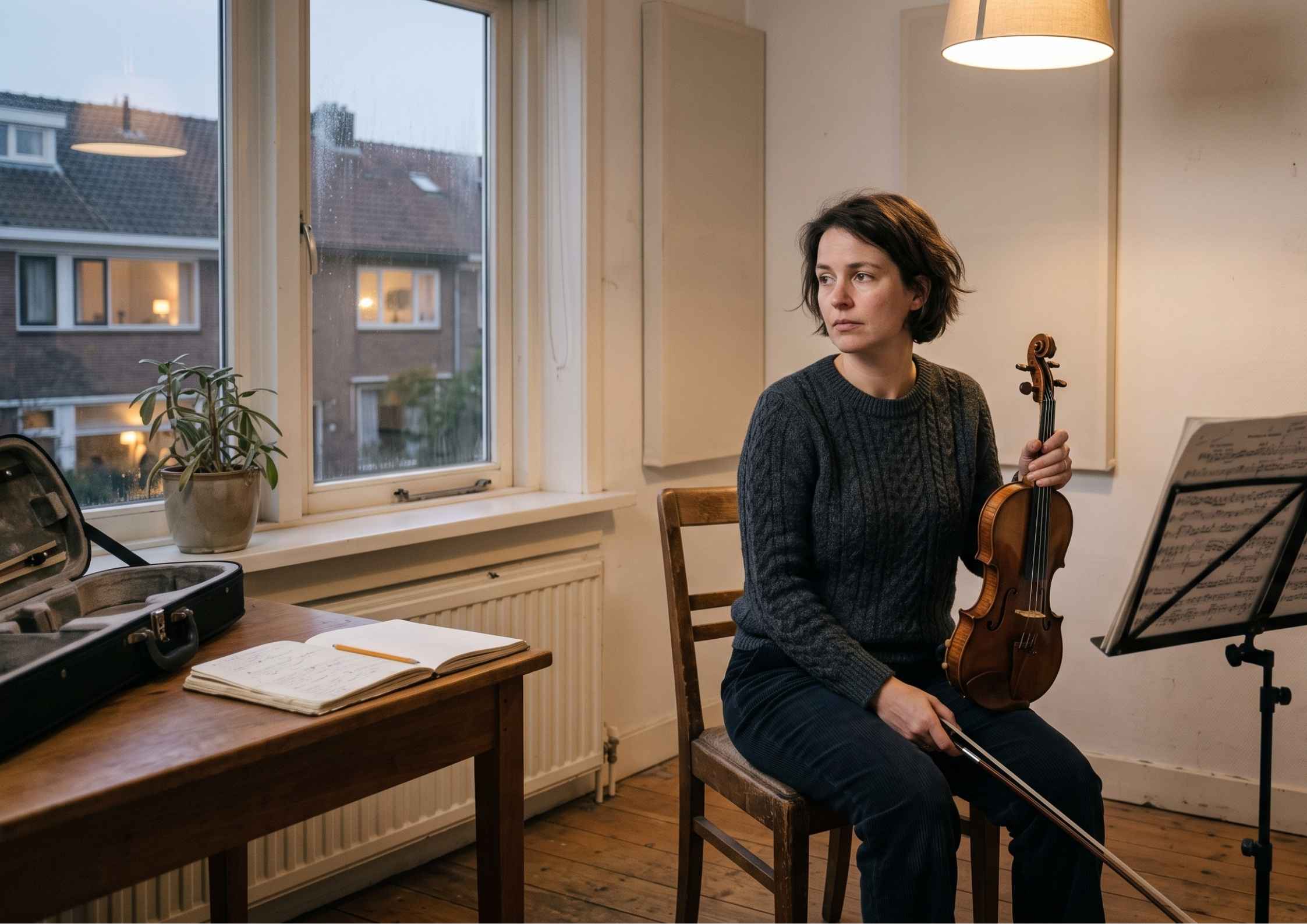
This is one of the quieter traps in musical preparation: the session that began as work and quietly became reassurance-seeking. The hours are real. The effort is real. But the function has shifted from building to checking — and checking, offered enough repetitions, rarely builds the trust you are looking for.
What makes a repetition useful
Not every repetition is the same. A useful repetition has a question behind it. When a note is sharp, that result is information — you can investigate the distance, the movement, the sound you anticipated, the physical preparation that preceded it. A purposeful repetition tests a specific adjustment.
A reassurance repetition simply asks: can I still do it? The first kind builds understanding. The second makes confidence dependent on the most recent attempt. If it goes well, you feel relief. If it does not, the session expands. Your playing becomes a sequence of verdicts rather than a process of learning.
Signs that you may be practising for reassurance
The following patterns do not mean that you are lazy, undisciplined, or practising incorrectly in every situation. They are invitations to notice what function practice is serving at that moment. This connects directly to what happens when overpractising stops feeling like preparation and starts feeling like control — the hours accumulate, but the feeling of being ready never quite arrives.
You repeat a passage after a successful attempt because you do not trust the result.
You continue even though you cannot name what you are changing.
Stopping produces guilt or fear rather than a sense of completion.
You measure the value of practice mainly in hours.
Your playing becomes tighter, less attentive or less consistent as the session continues.
You keep testing complete passages when a small, isolated question needs attention.
Replace time with a question
Before beginning, ask: what do I want to understand, change or experience in this session? The answer should be concrete enough that you can recognise progress.
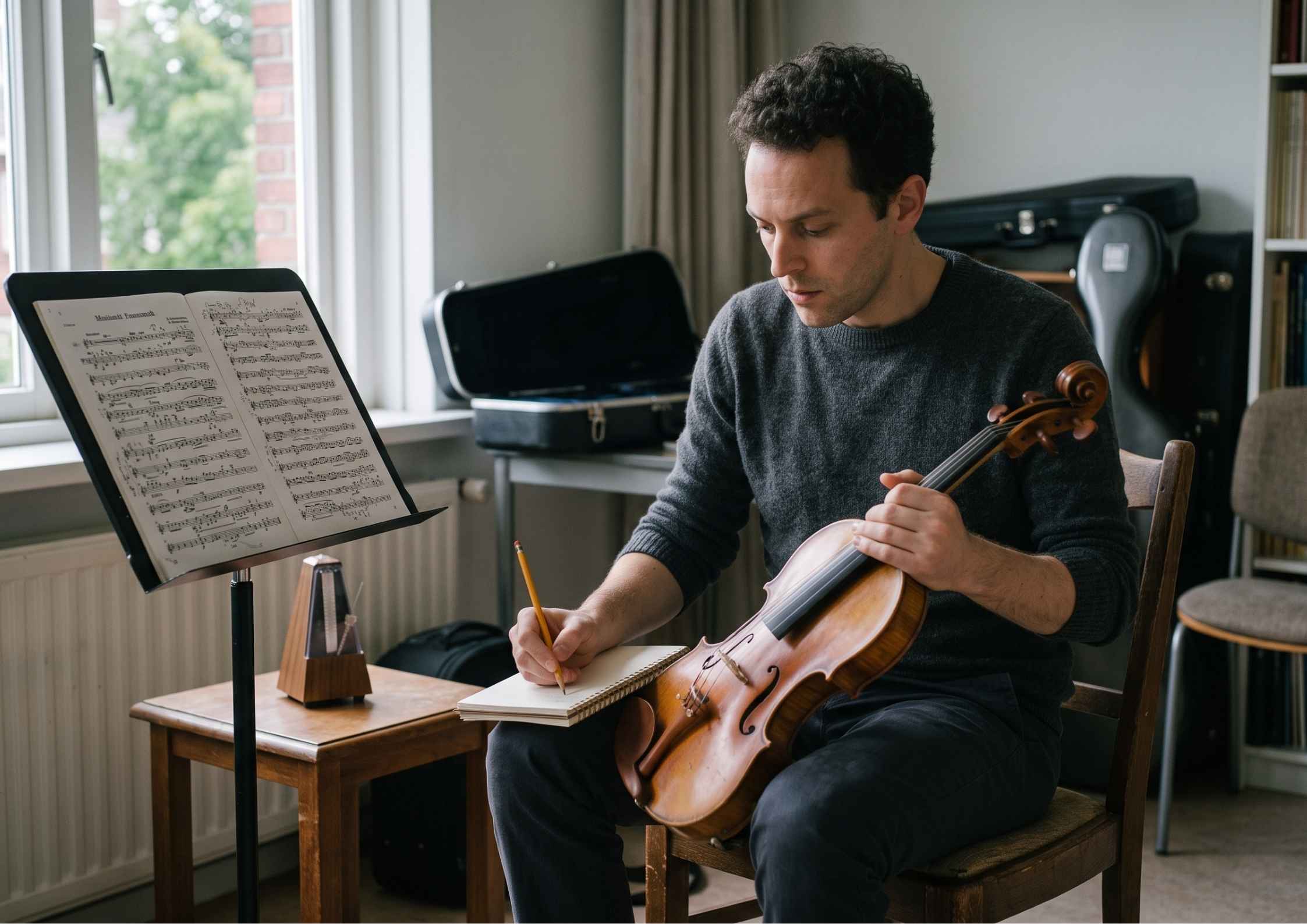
“Practise the concerto” is too broad. “Understand why the arrival in bar 47 becomes late” gives your attention somewhere to go. “Make the exposition secure” has no clear finish. “Play the exposition once while keeping the underlying pulse through the rests” creates an observable task.
A precise question often reduces the amount of physical repetition required. You might sing the line, look at the score, move silently through a shift, practise an open-string pattern or visualise a sequence before playing it again. These are not shortcuts around real work. They are ways of directing the work toward its actual purpose.
Decide how you will know when to stop
A useful practice goal includes an ending. You might stop when you understand the cause of a problem, when an adjustment has worked in two different contexts, or when you can describe what the next session needs. The guilt of stopping is one of the less-discussed costs of this profession — musicians are trained to associate stopping with lack of commitment, which makes it very hard to stop deliberately, even when deliberate stopping is exactly what the work requires.
This is especially important after a good attempt. Musicians often respond to success by immediately testing whether it was accidental. Sometimes another attempt is useful. Sometimes the braver and more intelligent decision is to register what worked and leave it alone.
Stopping protects more than your energy. It teaches you that you do not need to interrogate every successful moment before you are allowed to trust it.
Practise curiosity, not only correction
Fear narrows attention. It asks whether something is right or wrong and demands an immediate answer. Curiosity creates more options: what changed in that attempt? What did I hear before I moved? What happens if I reduce the effort? Which part of the gesture is already reliable? This is also what perfectionism does when it stops serving the music: it narrows the field of attention from ‘what can I learn here’ to ‘what is still wrong.’ Both close off the kind of listening that makes practice genuinely productive.
Enjoyment can belong here too. Not as a reward for playing perfectly, but as the experience of noticing, experimenting and becoming more capable. When improving and enjoying are treated as opposites, practice easily becomes an obligation. When they support each other, concentration becomes more sustainable.
A simple reset when you cannot stop
Put the instrument down for a moment and name the problem in one sentence. Then ask what the next repetition will test. If you cannot answer, do not play it again yet. Look at the score, imagine the action, take a short break or write down what you have learned.
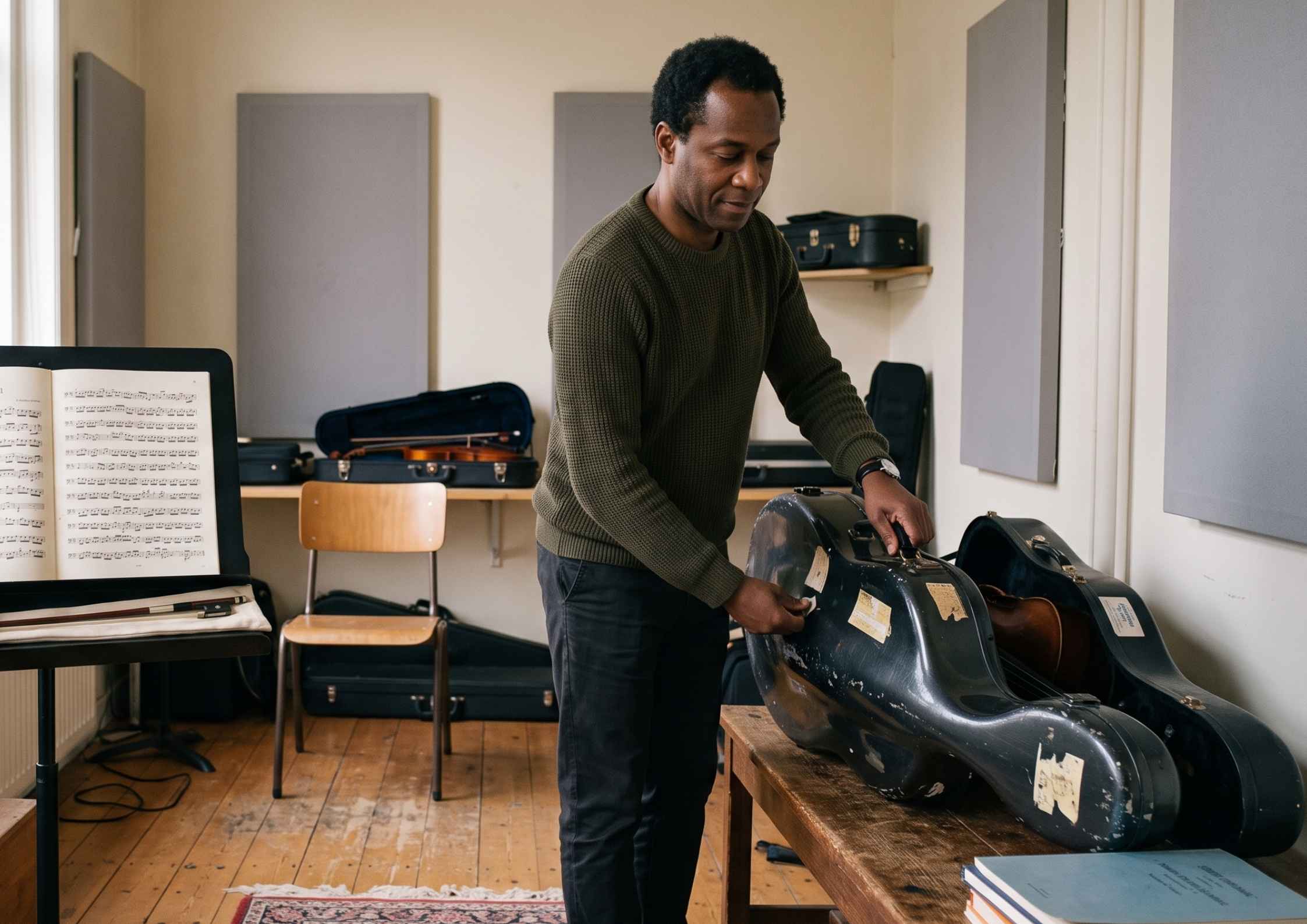
When you return, make one deliberate attempt. Observe the result without turning it into a judgment about yourself. Decide whether you have new information. This small pause interrupts the cycle in which anxiety chooses the next repetition for you.
Practice should help you move
The purpose of practice is not to hold your level in place through constant vigilance. It is to help you understand, explore and move forward. Some days that requires patient repetition. Other days it requires the restraint to stop.
The next time you feel unable to leave a passage alone, ask whether you are still learning or simply trying to feel safe. That distinction can return both time and trust to your playing.
FAQ
How much practice counts as overpracticing?
There is no universal number of hours. Overpracticing is better identified through declining concentration, physical strain, loss of purpose and repetition driven by fear. The same duration may be appropriate one day and unhelpful the next.
Is repeating a passage several times always ineffective?
No. Repetition is valuable when each attempt consolidates or tests something specific. It becomes less useful when you are repeating automatically or trying to remove every trace of uncertainty.
How can I stop practising without feeling guilty?
Define the purpose and stopping point before the session. Record what you discovered and what comes next. This gives stopping a musical reason rather than making it feel like an escape from work.

Instagram
Facebook
LinkedIn
Website