


You Prepared the Excerpts. You Did Not Prepare the Entrance.
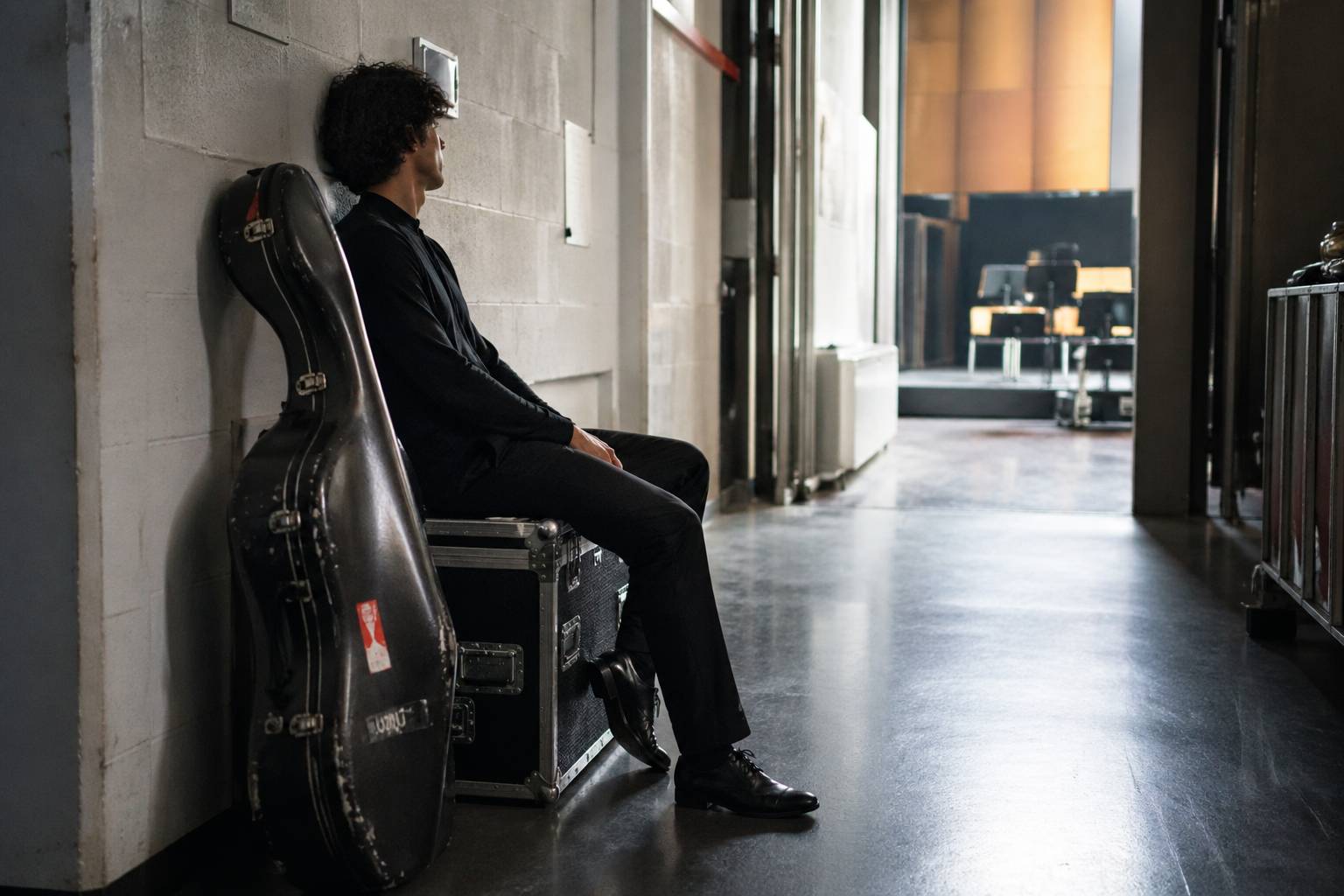
You are in the corridor. The candidate before you is still playing, and you can hear enough through the door to know they are good. Your programme sheet has gone soft at the corner from being folded and unfolded. Somebody in a lanyard will come out shortly and say your number, and your body has already understood this and started making arrangements.
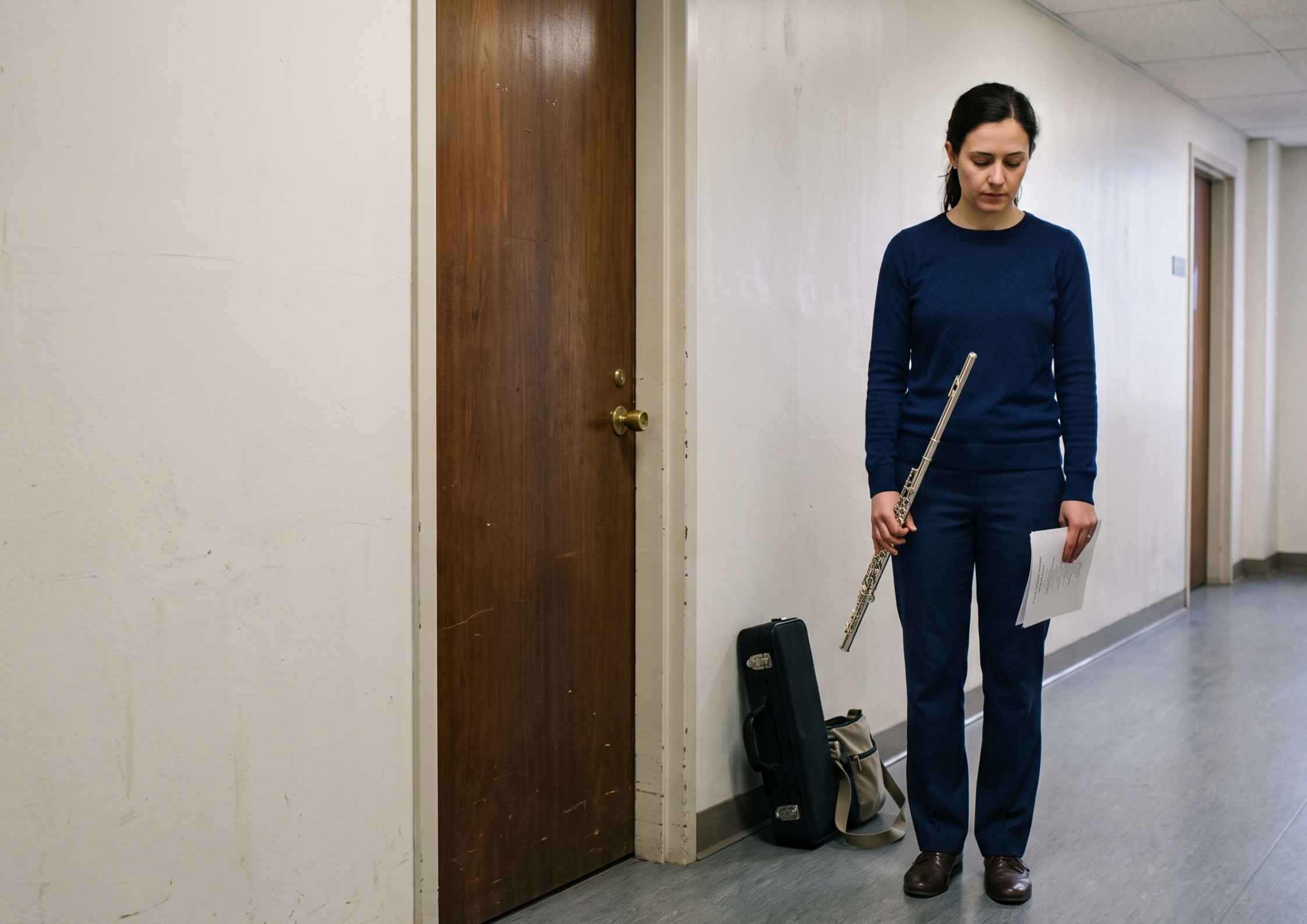
You have spent five months on the excerpts. You have spent no time at all on this.
The part of the audition you never rehearse
Think about what your preparation has actually consisted of. Almost all of it begins at bar one of a piece of music. You sit down, you are already settled, the instrument is warm, the room is yours, and then you play.
The real audition does not begin there. It begins in a corridor, continues through a door, a walk across an unfamiliar floor, a stand at the wrong height, a chair that is not your chair, a tuning note in an acoustic you have never heard, and a silence in which nobody tells you when to start. Then bar one.
Every one of those steps is completely predictable. You know they are coming, months in advance, in exact order. And most musicians arrive having practised none of them, then conclude they are bad under pressure when the unpractised part goes badly. That is not a fair verdict on yourself. It is simply a gap in the preparation, and it is a large part of why playing that is genuinely ready at home is not automatically ready in the room.
Why the first minute decides more than it should
A panel forms an impression quickly. That is not unfair or lazy; it is what listening does, and everyone who has sat on the other side of that table knows it. But that is not the main reason these ninety seconds matter.
The main reason is that you form an impression too. In the first phrase you make a private judgement about how this is going, and then you play the remaining twenty minutes inside that judgement. An opening that felt scrambled does not merely sound scrambled. It sets the terms for everything after it.
What your body is doing in the corridor
The reading most musicians give this is that something has gone wrong. The heart rate is up, the hands are cold, the breath has moved higher in the chest, and the interpretation arrives instantly: I am not ready, and the day is already going badly.
It is worth challenging that reading, because the activation itself is not the problem. A body preparing for something demanding does exactly this, and it does it for musicians who go on to play superbly. The difficulty comes from what we conclude about it, and treating that response as information rather than as a defect changes what happens in the next sixty seconds more than any technical adjustment will.
Break the ninety seconds into its parts
Vague fear resists preparation. Defined sequences do not. So define it. The wait. The walk. The setup and the tuning. The last silence. The first phrase.
Five components, each of them rehearsable, and each with its own small decision to make in advance rather than on the day. Where do your eyes go while you walk in. What exactly you do first when you reach the stand. How long you allow yourself before the first note, decided beforehand so that the silence does not become a negotiation. Whether you look at the panel at all. None of these are large questions, and each one you settle in advance is one less thing being improvised by a nervous system that is busy.
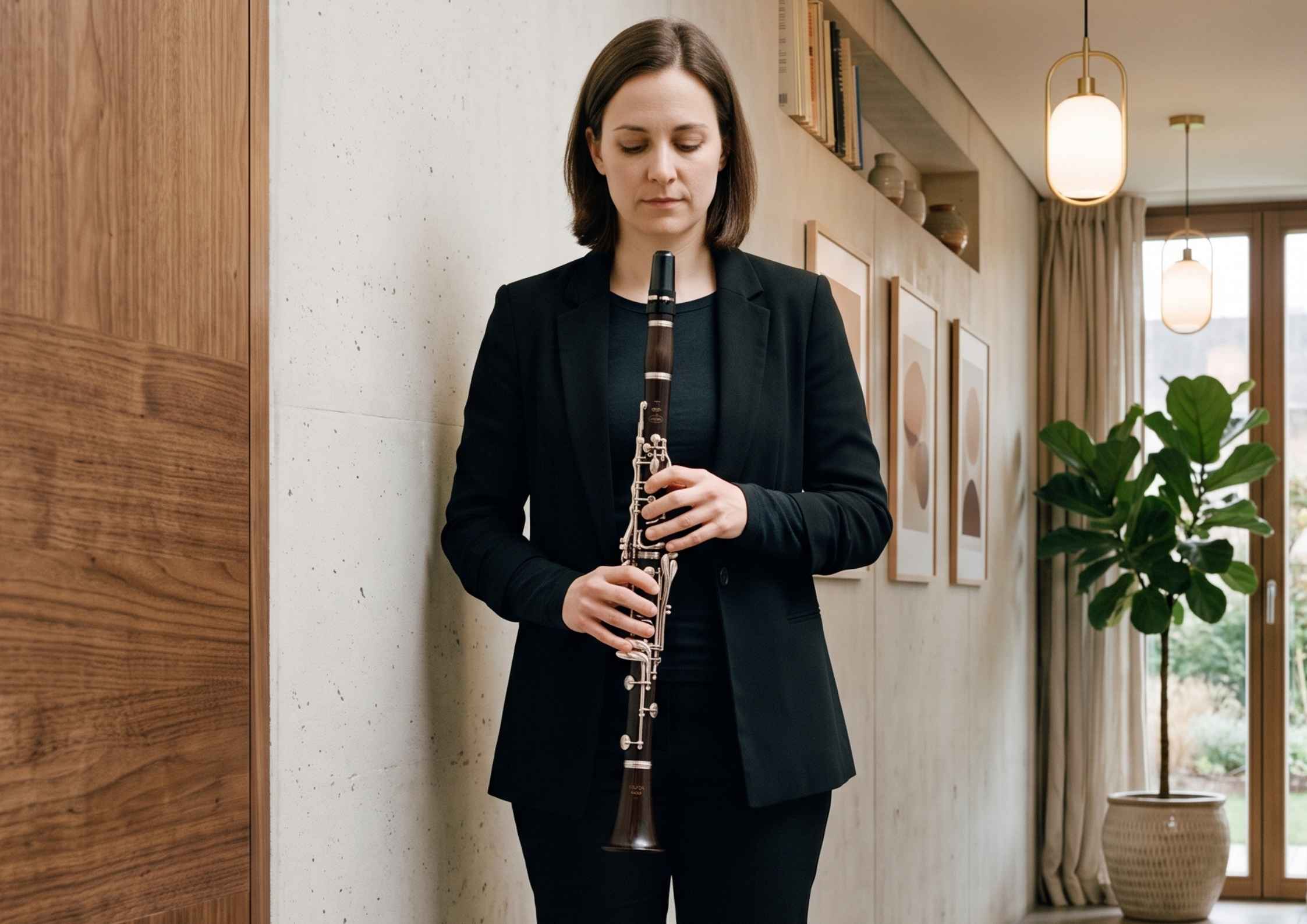
A reset you can do standing up
Whatever you use in that corridor has to survive three conditions: you are standing, your eyes are open, and other people can see you. That immediately rules out most of the advice musicians are given, which assumes a quiet room and several undisturbed minutes.
What holds up is very short and has three points. Feel both feet on the floor and notice how the weight is distributed between them. Follow one out-breath all the way to the end, without deepening it or making it slower, and let the in-breath look after itself, which it always has. Bring your attention to your hands, exactly as they are.
Sixty seconds, invisible to everyone around you, and no part of it requires you to feel calm. That last point matters. This is not an attempt to remove the activation, which would fail anyway. It is a way of putting your attention somewhere it can actually operate, so that you walk in as someone who is present rather than someone being carried in by their own thoughts.
It only works if it is old
Here is the part that gets skipped, and skipping it is why so many musicians conclude these techniques do not work for them. A three-point reset used for the first time on audition day will do very little. Under pressure you do not rise to new skills; you fall back on well-worn ones.
So it has to be old by the time you need it. Fifteen minutes a day of ordinary attention practice, in undramatic conditions, for weeks before the date. The short corridor version exists because the long version built it. This is also the line where preparation separates from the attempt to control every variable: you are not making the day predictable, you are making one small response reliable inside an unpredictable day.
Rehearse the entrance itself
The practical change is straightforward and slightly uncomfortable, which is usually a good sign. Stop starting your run-throughs already seated and settled.
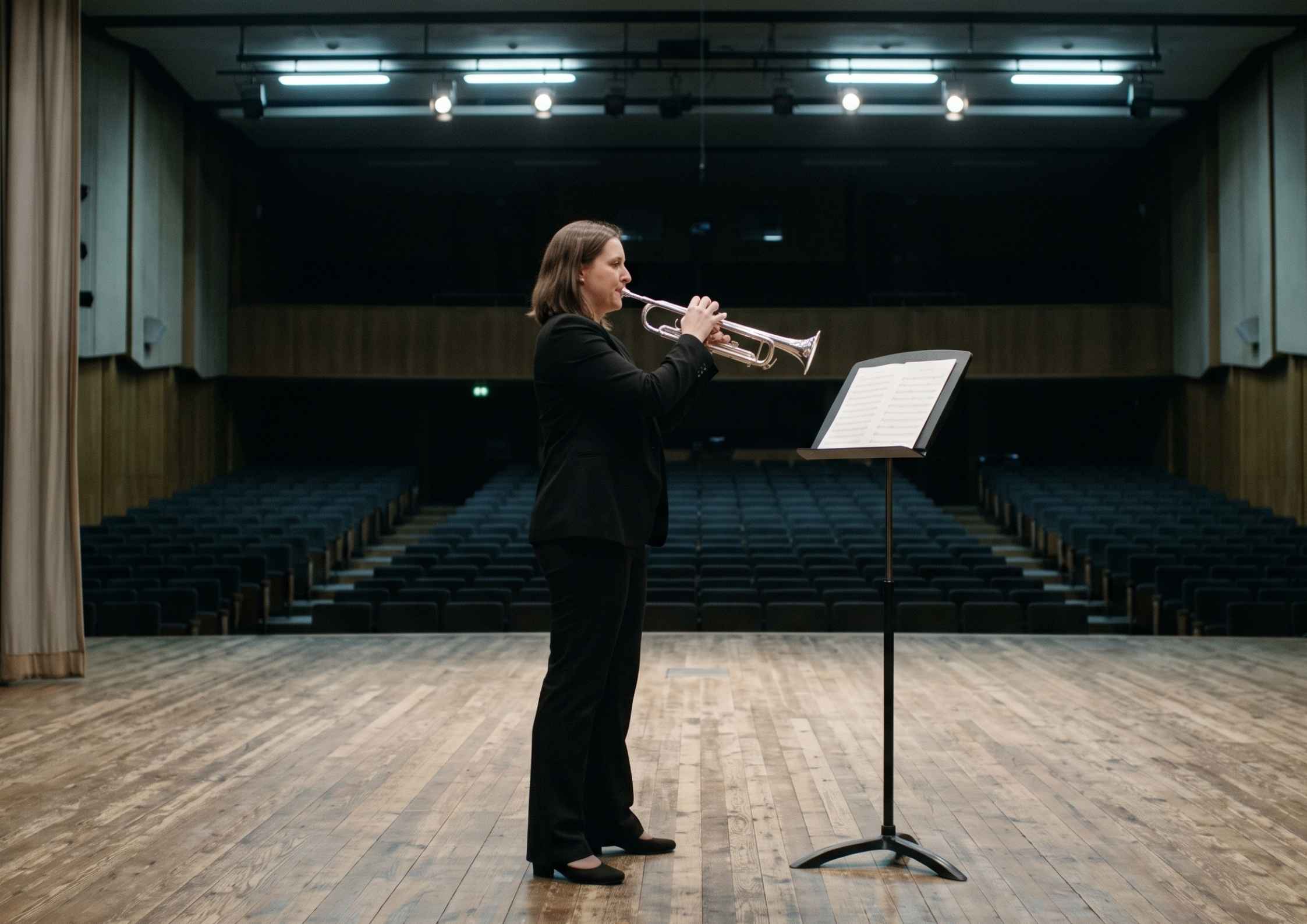
Instead, run the whole sequence. Leave the room. Come back in with your instrument. Set the stand at the wrong height and correct it. Tune. Take the silence you decided on. Play the first phrase. Then stop, and do it again from the corridor. Ten repetitions of the entrance will do more for your audition than another hour on a passage you already have, and in the final week that trade is almost always worth making, because past a certain point additional repetition is no longer adding anything.
What is actually yours
You do not choose the panel, the acoustic, the order of the list, the chair, the temperature of the room, or whether the person before you played brilliantly. Almost nothing about an audition day belongs to you, which is exactly why it is worth being precise about what does.
The ninety seconds before you play belong to you. They are the same at every audition you will ever take, in every hall, in every country, and they can be prepared with the same seriousness you give to a difficult excerpt. Most people never do, which means this is one of the few places in an audition where a small amount of honest work still puts real distance between you and the room.
Frequently Asked Questions
What if I have no time to warm up properly before an audition?
It happens often, and it is more survivable than it feels. What matters most in that situation is not squeezing in more playing but arriving at the first note present rather than rushed. A short standing reset takes a minute and protects the opening; frantic extra playing in a corridor usually costs more than it gives.
Should I look at the panel when I walk in?
Either choice works, provided you decide beforehand rather than in the moment. Some players find a brief acknowledgement settles them; others prefer to keep their attention on the stand and the instrument. The cost is not in the choice itself but in improvising it while your heart rate is climbing.
How long should I take before the first note?
Longer than feels natural, and decided in advance. Under pressure, time compresses, so the pause that feels excessive to you is usually normal or even short from the panel's side. Two or three unhurried seconds after you are set is enough for most players, and rehearsing that pause is as useful as rehearsing the phrase after it.
Does this apply to a screened first round as well?
Yes, with small adjustments. The walk and the panel's gaze disappear, but the wait, the unfamiliar acoustic, the setup and the silence before the first note remain, and those carry most of the difficulty. Screened rounds also tend to compress everything, which makes a rehearsed opening more valuable rather than less.

Instagram
Facebook
LinkedIn
Website