

Why You Play Well in Practice but Struggle in Auditions
Few things are more discouraging than walking out of an audition knowing your real level never made it into the room.
At home, the excerpts felt stable. You knew what you wanted musically. Your work had shape, direction, and consistency. Then the audition started, and suddenly everything seemed less available. The body tightened. Time moved differently. The first bars went by in a blur.
That experience leaves many musicians with the same painful conclusion: Something is wrong with me under pressure.
Usually, that is not the most accurate conclusion.
More often, the issue is that your preparation has been strong in private and incomplete in public. You trained the material, but not enough of the moment in which the material has to live.
That is where mock auditions for musicians can make a real difference.
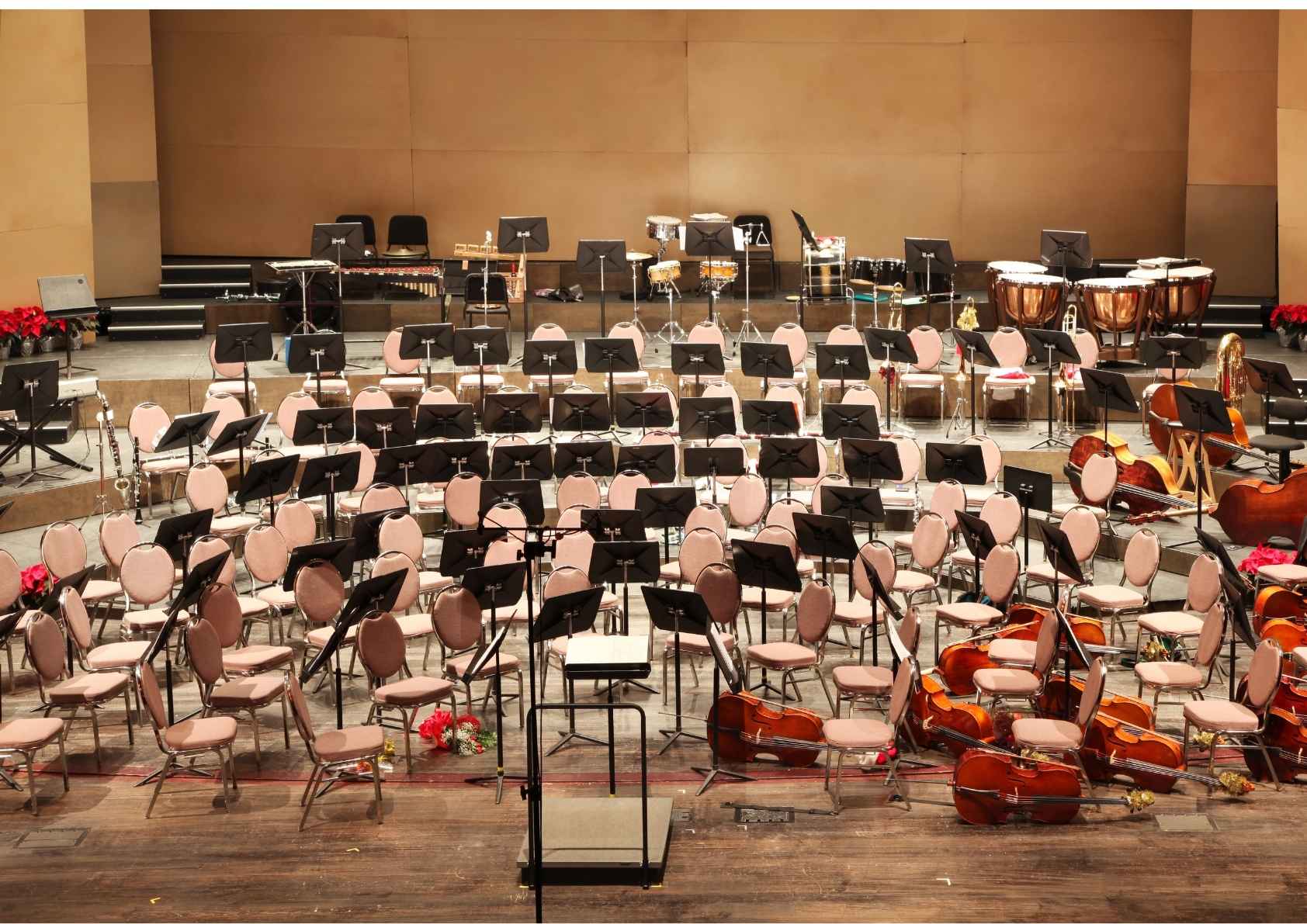
Why the practice room does not automatically prepare you for the audition room
The practice room gives you control.
You can stop after a wrong note. You can restart an opening. You can isolate a shift, repeat a rhythm, adjust a bowing, and stay inside a familiar environment. All of that is useful. It is how playing improves.
Still, an audition asks for something different.
You walk in and begin. There is no gradual entry into the experience. No warm transition. No chance to explain how the excerpt sounded yesterday. In that setting, your nervous system becomes part of the performance whether you planned for it or not.
That is why audition preparation for musicians has to go beyond learning excerpts well. You also need some experience with exposure, immediacy, and continuity. Otherwise the first time you truly meet audition pressure is on the day that matters most.
The real problem is not always technical
When musicians struggle in auditions, they often respond by practicing more.
Sometimes that helps. Often it does not.
If your preparation already covers the notes, rhythms, style, and musical intent, extra repetition may not solve the real weakness. The weak point may be the handoff between preparation and performance. In other words, the music is there, but your system does not yet know how to access it quickly while being watched, evaluated, and pushed by adrenaline.
That is why so many hardworking musicians feel confused. They are not imagining the difference. The difference is real. It simply does not come from the place they keep trying to fix.
What mock auditions actually train
A mock audition is valuable because it reveals what private practice tends to hide.
It shows you what your first ten seconds feel like when there is no easing into the room. It shows whether your tempo changes under pressure, whether your attention narrows too much, and whether one small imperfection pulls you out of the music for longer than you realized.
Just as important, it helps you notice what still works.
That part matters. Musicians under pressure often focus so heavily on what breaks down that they miss what remains intact. A mock audition gives you a more honest picture. You begin to see both the instability and the strength. From there, training becomes far more precise.
Instead of vaguely trying to “be more confident,” you can work on your entrance. Instead of worrying about nerves in general, you can practice recovering after the first shaky note. Instead of fearing pressure as one giant problem, you can train the exact moment where your attention tends to drift away from sound and into self-monitoring.
This is where practice under pressure becomes practical rather than abstract.

Why this helps more than another week of private repetition
There is a big difference between correcting music and presenting music.
Private practice is mostly corrective. You stop, refine, repeat, and improve. A mock audition shifts the task. Now the challenge is to stay with the line, keep going, and let the preparation come through without constant interference.
That change can feel uncomfortable at first. Good. It means you are touching the part that actually needs training.
A musician who has never played straight through for another person may be technically prepared and still emotionally unpracticed. A musician who has done several mock auditions usually starts to recognize the inner sequence more quickly: the rise in heart rate, the urge to control too much, the moment attention leaves the music, and the choice to come back.
That familiarity is one of the hidden gifts of how to practice for auditions well. Pressure becomes less mysterious. The room loses some of its power to shock you.
What changes after repeated mock auditions
The goal is not to eliminate nerves. That would set the wrong expectation.
What changes is your relationship with the nerves that are already there.
You become less surprised by the physical response. The opening feels more rehearsed. Recovery gets faster. A small slip no longer has to become the emotional center of the whole excerpt. Your system starts learning that pressure is difficult but survivable, and that you can stay musically engaged even while part of you feels activated.
That is a very different kind of preparation from simply hoping the adrenaline will behave on the day.
For musicians who want to perform under pressure music at a higher level, this shift is often more important than another round of note-checking.
How to use mock auditions well
A mock audition should challenge you, but it should also teach you something specific.
Keep it simple. Walk in as you would on audition day. Start without excessive delay. Play straight through. Then review what happened with honesty and proportion.
Afterward, ask yourself:
Where did I lose connection?
What held up better than I expected?
What deserves focused work this week?
Those questions lead somewhere useful. They protect the exercise from turning into a dramatic judgment on your worth, which is never the point.
The point is to narrow the gap between the musician you are in the practice room and the musician who shows up when it counts.
If your playing shrinks under pressure
Do not assume that your best playing is unreliable.
In many cases, it simply has not been trained in conditions close enough to the real event. That is a solvable problem.
Mock auditions for musicians matter because they bring reality into the preparation process early enough for change to happen. They let you work with pressure before the outcome is final. They show you where your attention goes, how your body reacts, and what support your playing actually needs.
For many musicians, that is the missing link.
Not more effort.
Not more panic.
Just a better bridge between practice and performance.
FAQ
What are mock auditions for musicians?
They are simulated audition experiences that help you practice under more realistic pressure. Usually that means walking in, starting promptly, playing without stopping, and reflecting on what happened afterward.
Why are mock auditions for musicians so helpful?
They reveal how you actually function when the stakes feel real. That includes your focus, pacing, recovery after mistakes, and physical response to pressure. Private practice rarely shows all of that clearly.
How often should I include practice under pressure?
Once a week can already make a difference during intensive preparation. The key is consistency. Even a short, well-structured pressure simulation is more useful than waiting until audition day to test how you respond.
Is this really part of how to practice for auditions?
Yes. Learning the excerpts is essential, but audition preparation also includes learning how to begin, how to stay present, and how to recover. Those are performance skills, and they need practice too.

Instagram
Facebook
LinkedIn
Website