


Finding Your Center Without Becoming Self-Centered as a Musician
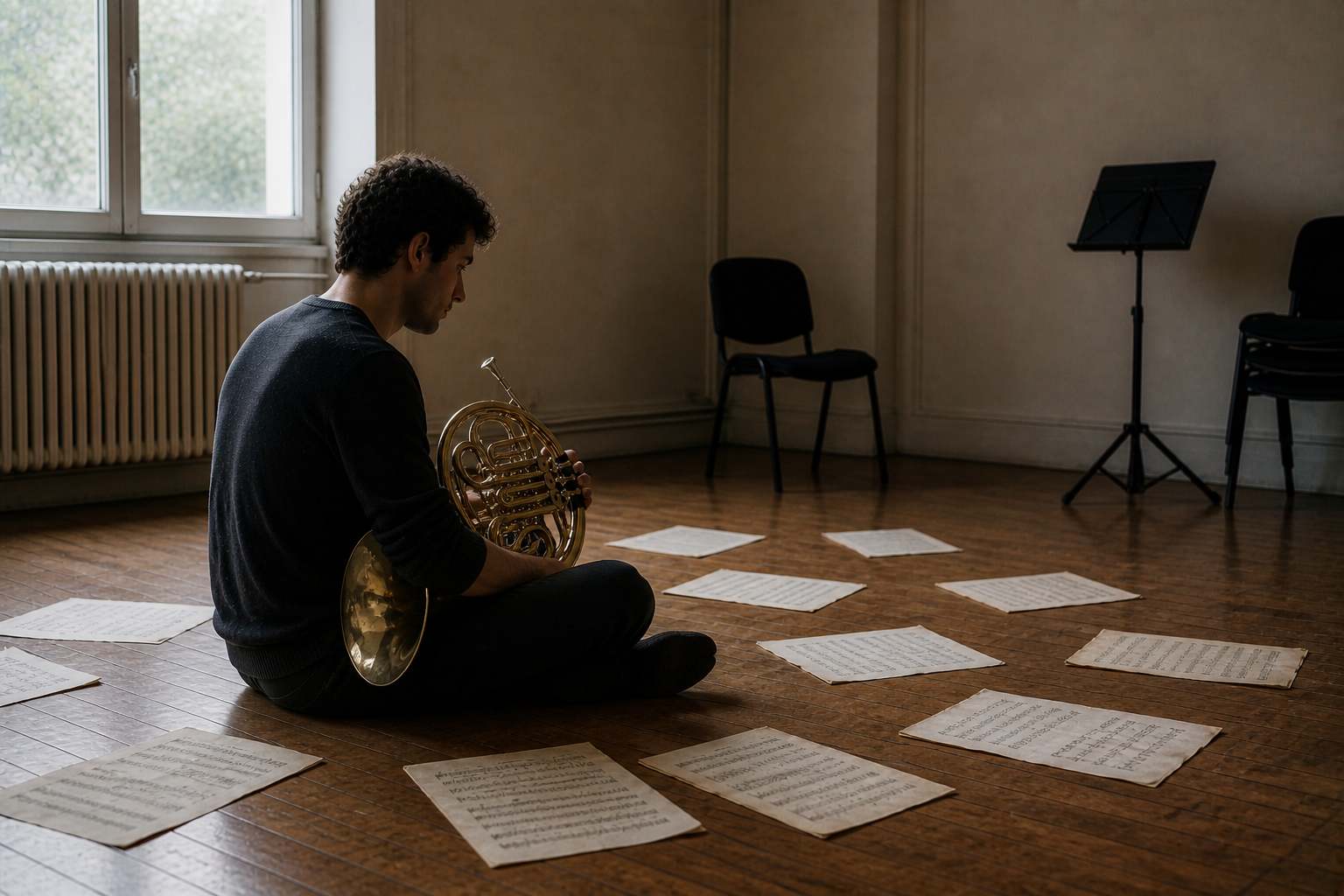
For many musicians, self-focus feels uncomfortable.
You were taught to listen, adapt, blend, respond, and fit into something larger than yourself. In ensemble playing especially, the whole often comes first. The section comes first. The conductor comes first. The score comes first. The sound around you comes first.
So when someone says you need to come back to yourself, it can sound wrong.
Too individualistic. Too inward. Too ego-driven.
And yet many musicians suffer precisely because they never learned how to find their own center inside all that responsiveness.
They are attentive to everything around them, but not anchored in themselves. They are highly aware, but not grounded. They care deeply about the group, but they disappear inside it.
That is not generosity. It is instability.
And it creates a very specific kind of struggle: you can play beautifully in moments when the environment feels good, then lose yourself the moment something around you shifts.
Why this matters more than most musicians realize
When your inner base depends too much on what is happening outside you, performance becomes fragile.
A colleague’s energy affects your confidence. A conductor’s face changes your breathing. A difficult rehearsal unsettles your whole nervous system. One tense atmosphere in the section pulls your attention away from sound, rhythm, and musical intention.
From the outside, it may look like pressure or inconsistency.
From the inside, it often feels like this: I know how to play, but I cannot stay connected to myself when it matters.
That is why finding your center matters so much. Not because music should become self-centered, but because you need somewhere to stand inside everything that music asks from you.
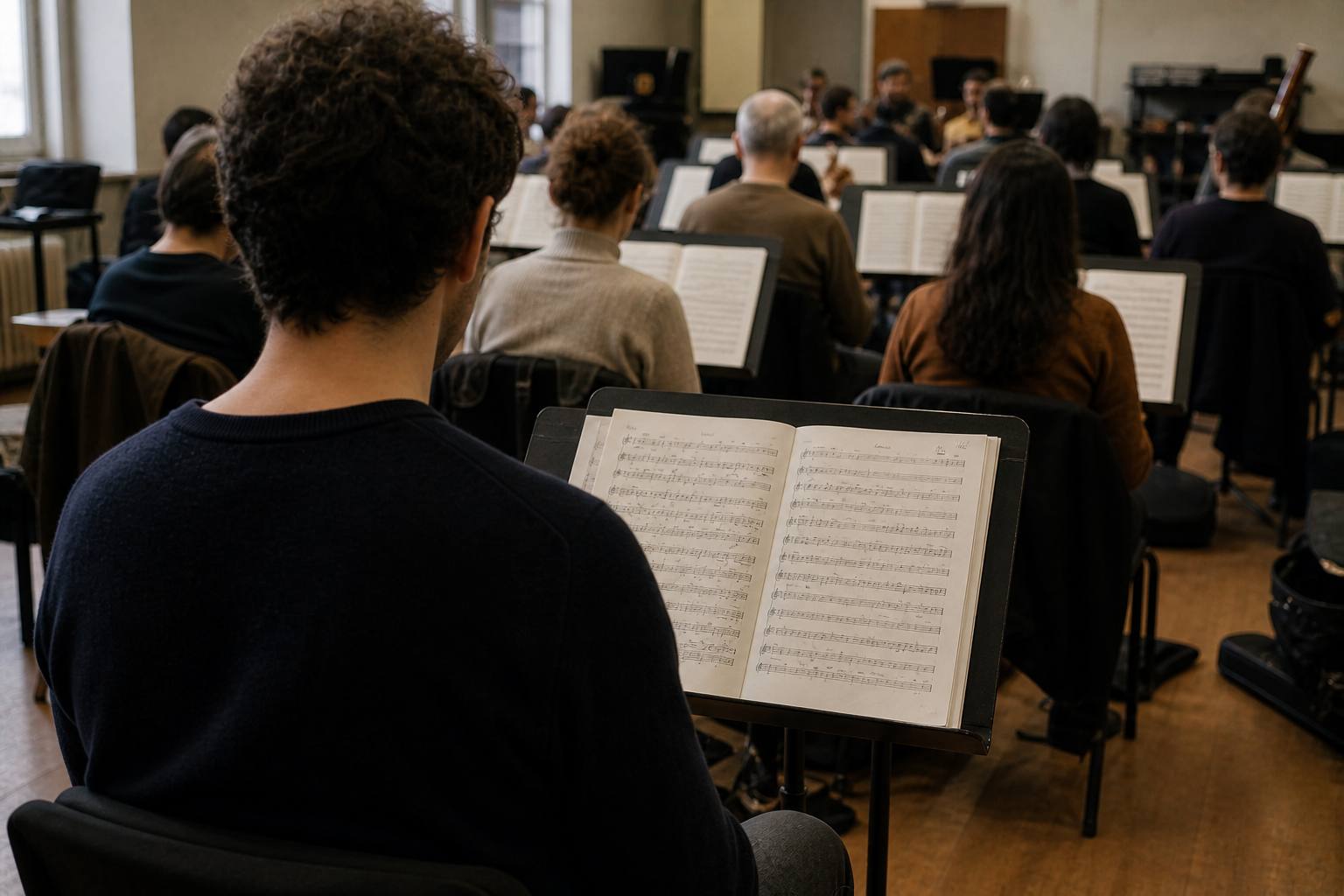
The confusion many musicians carry
Part of the problem is linguistic.
When musicians hear “put yourself first” or “focus on yourself,” they often imagine selfishness. They imagine ignoring others, becoming rigid, or caring only about their own version of things.
But that is not what a healthy center is.
Being the center of everything is one thing. Finding your center is something else entirely.
The first says: everything revolves around me.
The second says: I need an inner base from which I can relate, respond, and contribute.
That distinction changes everything.
Without that base, you are constantly reacting. With it, you can stay available to the music and to other people without being pulled apart by them.
Why ensemble musicians often lose contact with their center
This happens for understandable reasons.
In classical music, you are rewarded early for noticing external information. You learn to pick up subtle cues. You sense approval and disapproval quickly. You become highly skilled at reading the room. In an orchestra, this sensitivity is useful. It helps coordination, blend, and social survival.
But it can also train you to live from the outside in.
Instead of beginning with your own sense of pulse, breath, sound, and intention, you begin with everyone else. What are they doing? How does this feel? Am I fitting? Am I too much? Am I enough? What is the conductor giving? What is the section doing? How is this landing?
The result is often a musician who is deeply responsible, very perceptive, and quietly disconnected from themselves.
That disconnection may not show in every setting. Sometimes it only appears under pressure. Sometimes it appears in orchestral situations more than in solo ones. Sometimes it emerges after years of functioning well.
But when it appears, it can feel exhausting.
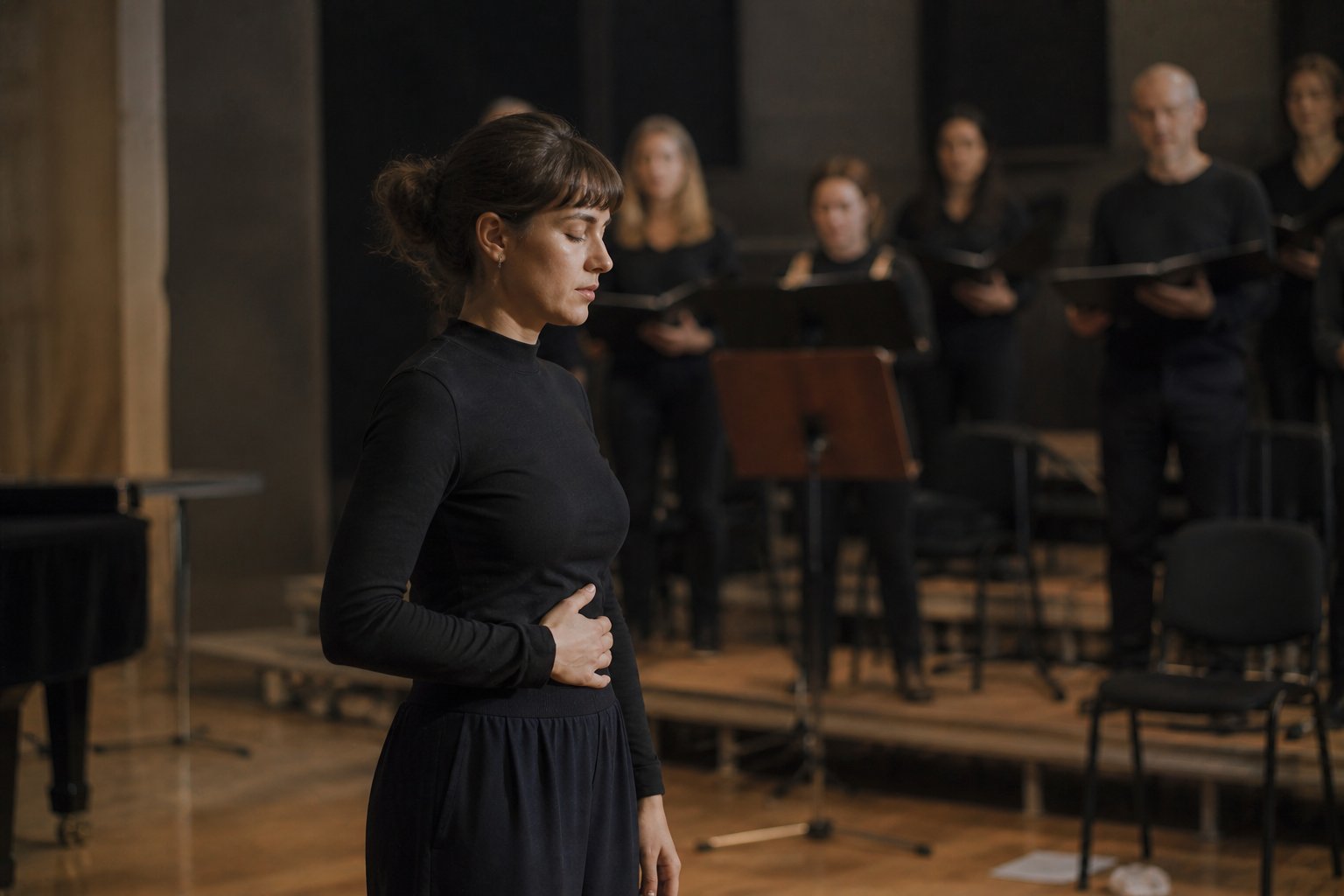
What it looks like in real life
This does not always look dramatic.
It can look like feeling most unsettled when other people around you seem unsettled.
It can look like rehearsals becoming emotionally draining because you are absorbing too much.
It can look like over-adjusting all the time and then wondering why your playing feels less free.
It can look like needing the atmosphere to be right before you can be fully yourself.
It can also look like something more subtle: you play better when you finally let the rest move into the background a little and start from your own clarity first.
Many musicians feel guilty when that happens. They think it means they are becoming too focused on themselves.
Often it means the opposite. It means they are finally playing from a stable base instead of from emotional overexposure.
The difference between isolation and inner grounding
Finding your center does not mean shutting other people out.
It does not mean becoming less collaborative, less generous, or less aware. In fact, the most grounded musicians are often the most available. They listen better because they are not panicking. They adapt better because they are not collapsing. They contribute more because they are not busy trying to hold themselves together.
Grounding is not separation. It is support.
It allows you to say, internally: this is where I begin from.
My breath.
My sound.
My sense of time.
My physical presence.
My musical intention.
From there, I meet the group.
That is very different from trying to build yourself entirely from what the group is giving you.
Why this can feel strange at first
If you have spent years orienting outward, finding your center may feel unfamiliar.
You may even interpret that unfamiliarity as wrongness.
Many musicians are so used to measuring effort by tension, overwork, and constant correction that anything more grounded feels suspicious. If you are less externally preoccupied, you may feel less busy in your head. If you trust more, you may feel less dramatic urgency. If you stop over-monitoring everything, you may briefly worry that you care less.
Usually, that is not what is happening.
What is happening is that your system is learning a different way to function.
A calmer inner state can feel strange when you are used to intensity. A clearer center can feel selfish when you are used to over-adapting. But strange does not mean wrong.
Sometimes it means healthier.

Practical ways to strengthen your center
This work does not begin with a big personality shift. It begins with small, repeatable changes in attention.
1. Start from physical presence
Before rehearsal or practice, take a few seconds to notice your body. Feel your feet. Your seat. Your breath. The weight of the instrument. Let your body become a place you can begin from.
2. Name your own musical intention first
Before you get absorbed in what everyone else is doing, ask yourself what you want to communicate. Time, line, color, character, ease, direction. Begin there.
3. Notice when attention keeps leaving you
Some musicians do not lack focus. They lack a home base for their focus. Pay attention to when your mind immediately moves toward judgment, comparison, or group atmosphere. Then come back to one concrete anchor.
4. Practice contributing, not disappearing
In ensemble settings, notice whether you are participating from presence or from caution. There is a difference between listening and withdrawing. Let yourself still exist in the sound.
5. Let the whole come after the base
This is an important shift. Instead of starting with the whole and trying to locate yourself inside it, begin with your own grounded contribution and let that become part of the whole. This often creates more freedom, not less.
A more mature kind of musicianship
There is a version of maturity in music that looks polished from the outside but is constantly dependent on circumstances.
And there is another kind that is quieter and stronger.
It does not need to dominate. It does not need to prove anything. It simply knows where it is coming from.
That kind of musicianship is deeply collaborative, but not self-erasing. Sensitive, but not fragile. Open, but not unrooted.
It understands that the group matters enormously, but also that the group cannot replace an inner center.
This is especially important for musicians who work in environments where expectations, hierarchies, and emotional atmospheres are intense. If you do not know how to return to yourself, every room will define you a little too much.
You are not becoming too focused on yourself
Many musicians need to hear this clearly:
Coming back to yourself is not betrayal.
It is not ego.
It is not a lack of team spirit.
It is often the very thing that allows you to serve the music more honestly.
Because when you are grounded, you do not need to disappear in order to belong. You do not need to become hypervigilant in order to collaborate. You do not need the room to tell you who you are before you can play.
You can stay connected without being consumed.
And from there, what you bring to the group becomes more stable, more generous, and more alive.
FAQ
Is focusing on myself in orchestra playing selfish?
Not necessarily. Healthy self-focus means having an inner base for sound, attention, and intention. That usually makes you a better ensemble player, not a worse one.
Why do I lose myself so easily in group settings?
Many musicians are trained to prioritize external cues from an early age. Over time, that can make it harder to stay rooted in your own body, sound, and judgment.
What does “finding your center” actually mean?
It means developing a stable inner reference point so your playing does not depend entirely on the mood, energy, or reactions around you.
Can this help with performance anxiety?
Yes. When you are more grounded in your own physical and musical experience, attention is less likely to scatter into comparison, judgment, or external pressure.
How do I practice this without becoming rigid?
Start small. Use simple anchors like breath, posture, pulse, and musical intention. The goal is not to shut others out, but to remain connected to yourself while you listen and respond.

Instagram
Facebook
LinkedIn
Website